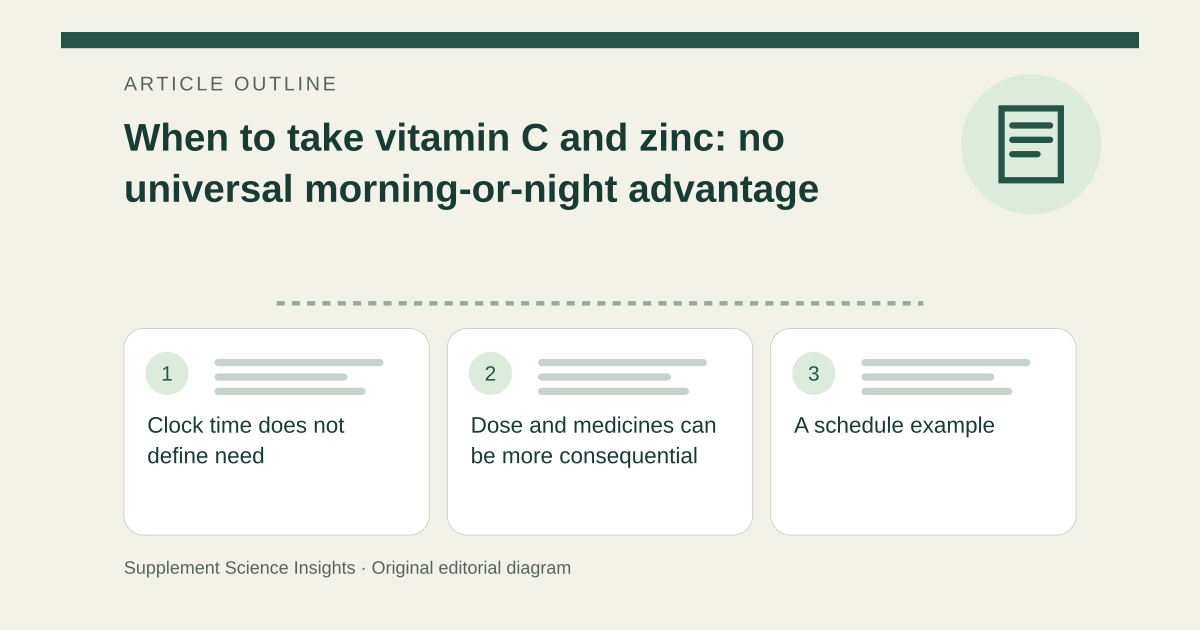
Clock time does not define need
Vitamin C and zinc have nutritional roles, but those functions do not establish that a combined tablet works best in the morning or at night. Determine whether supplementation has a purpose and read the specific product directions. A convenient schedule is not evidence of a special immune effect at that hour. [1][2]
Dose and medicines can be more consequential
High zinc intake can cause nausea and gastric distress, while high vitamin C intake can cause diarrhea or cramping. Zinc also interacts with some medicines, including certain antibiotics and penicillamine. Follow the prescription-specific spacing advice from a pharmacist rather than assuming that bedtime avoids every interaction. [1][2]
A schedule example
Imagine someone takes an interacting antibiotic in the morning and wants to add a C-and-zinc product. The first step is checking the antibiotic’s instructions and whether the supplement is needed, not selecting a generic morning or night rule. Count overlapping multivitamins and lozenges as well; moving an excessive daily dose to another hour does not reduce its total. [1][2]
| Hypothetical concern | Useful check |
|---|---|
| Morning versus evening | Product instructions and adherence |
| Nausea after a dose | Amount, formulation and assessment |
| Concurrent antibiotic | Exact medication-specific spacing |
Sources for this article
- Vitamin C - Health Professional Fact Sheet
Source consulted: 2026-09-20. This is a reference resource, not a claim that we conducted the studies or tested a product. - Zinc - Health Professional Fact Sheet
Source consulted: 2026-09-20. This is a reference resource, not a claim that we conducted the studies or tested a product.