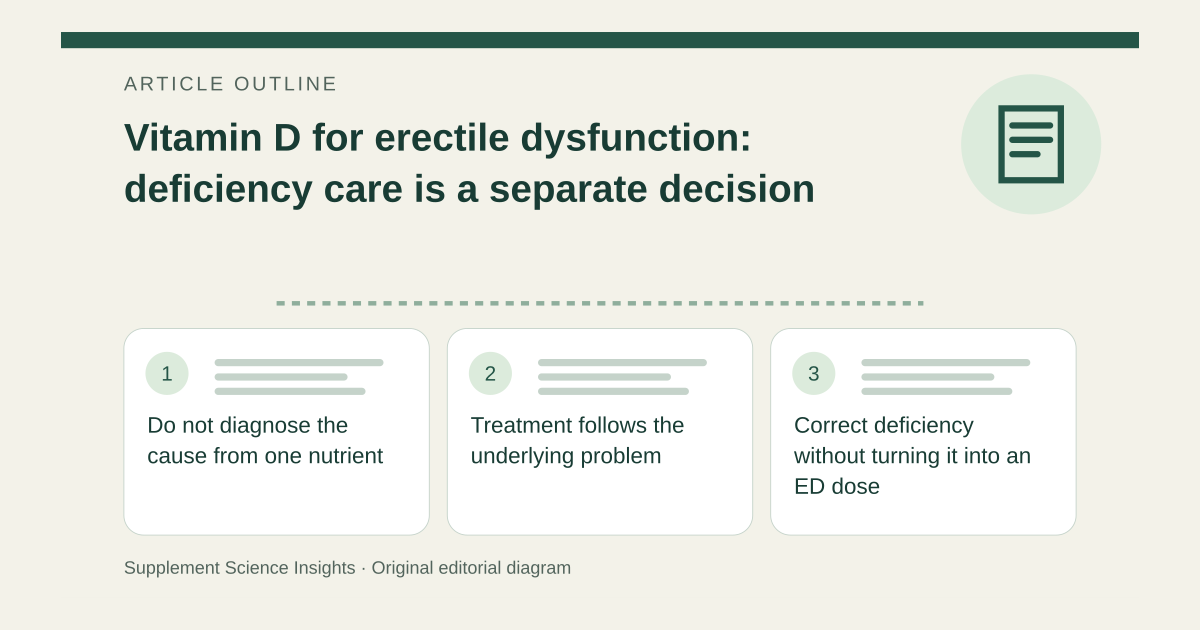
Do not diagnose the cause from one nutrient
NHS lists high blood pressure, high cholesterol, diabetes, hormone problems, depression and anxiety among possible causes of recurring erectile dysfunction. Medicine effects can also matter. Vitamin D status alone does not settle which explanation applies. [1]
Treatment follows the underlying problem
Assessment may include blood pressure and other health checks. Established options include PDE-5 inhibitor medicines, vacuum devices and treatment of contributing conditions; psychological support may help when relevant. The inspected NHS guide does not substitute a vitamin regimen for this evaluation. [1]
Correct deficiency without turning it into an ED dose
Vitamin D intake recommendations concern nutritional adequacy, while deficiency treatment may require an individualized plan. Excess supplemental vitamin D can cause toxicity. Neither a dietary target nor an upper intake limit is an erectile-dysfunction treatment prescription. [2]
Bring both issues to the same review
Imagine recurrent erection problems occur alongside a low vitamin D result. Ask how the deficiency should be treated and how the erection problem should be assessed. Do not assume correcting the blood result will necessarily resolve the symptom or justify increasing the dose indefinitely. [2][1]
| Situation | Relevant next step |
|---|---|
| Recurring erection problems | Arrange assessment of possible causes |
| Confirmed vitamin D deficiency | Follow a replacement and monitoring plan |
| Normal nutrient status | Do not infer benefit from higher doses |
Sources for this article
- Erectile dysfunction (impotence) - NHS
Source consulted: 2026-09-20. This is a reference resource, not a claim that we conducted the studies or tested a product. - Vitamin D - Health Professional Fact Sheet
Source consulted: 2026-09-20. This is a reference resource, not a claim that we conducted the studies or tested a product.