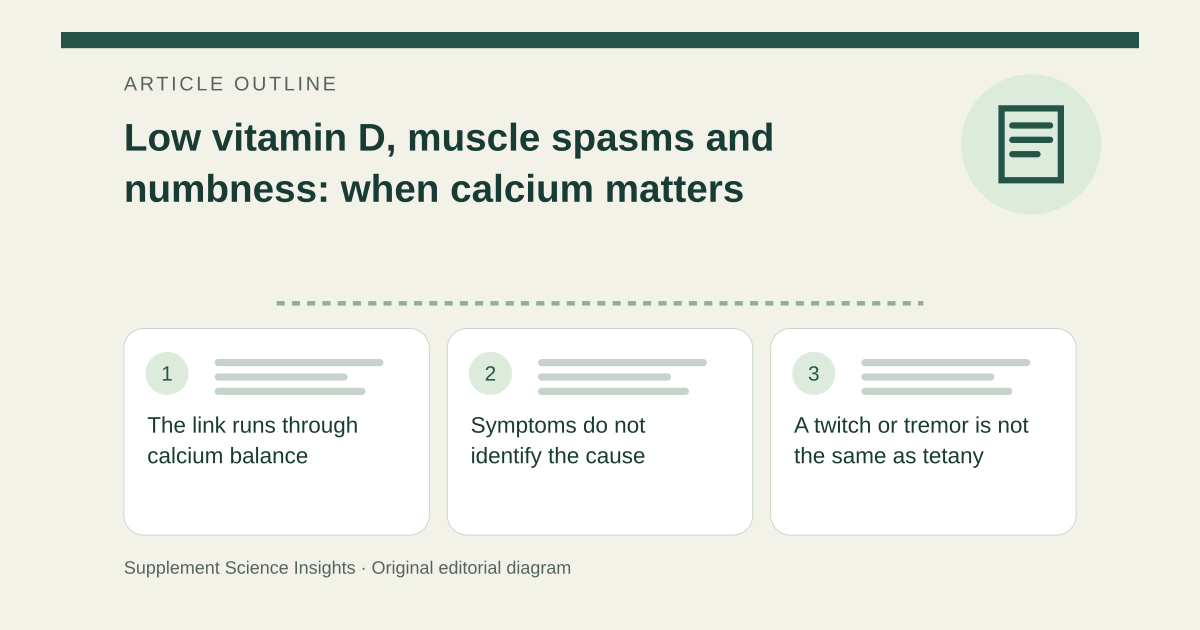
The link runs through calcium balance
Vitamin D supports intestinal calcium absorption. NIH describes its role in preventing hypocalcemic tetany: involuntary muscle contraction caused by low calcium. A vitamin D result and a calcium result therefore answer related but different questions; a low vitamin D measurement does not automatically establish symptomatic hypocalcemia. [1]
Symptoms do not identify the cause
Low calcium can cause muscle cramps and tingling around the mouth or in the extremities; severe cases can cause sustained spasms or seizures. Vitamin D deficiency is only one possible contributor. Kidney disease, parathyroid disorders, low magnesium and some medicines can also affect calcium balance. Persistent numbness should not simply be assigned to a vitamin result. [2]
A twitch or tremor is not the same as tetany
Small twitches are often linked to fatigue, stress, caffeine or medicines. A rhythmic tremor, painful cramp and sustained spasm are different symptom descriptions. The inspected guidance does not establish low vitamin D as the usual cause of every tremor. NHS recommends review for twitches lasting more than two weeks, occurring in several places, or accompanied by weakness or stiffness. [3][1]
Seizures require an immediate response
Severe hypocalcemia can provoke a seizure, but that does not mean vitamin D supplements treat epilepsy generally. For a first seizure, one lasting over five minutes, repeated seizures, or difficulty breathing or waking afterward, call emergency services. Keep the area clear, turn a lying person gently onto their side, and do not restrain them or put anything in their mouth. [2][4]
Treatment follows assessment
A clinician may assess calcium, albumin, kidney function, magnesium, parathyroid hormone and vitamin D according to the presentation. Symptomatic hypocalcemia can require urgent supervised calcium treatment. Taking a large vitamin D dose at home is not equivalent; excessive vitamin D can itself cause harmful high calcium. [2][1]
Distinguish a lab finding from an explanation
Imagine a low vitamin D result is followed by new hand spasms and tingling. Report the symptoms promptly so calcium and other causes can be assessed. Do not assume a routine replacement course makes new neurologic symptoms safe to ignore. [1][2]
| Finding | What it establishes |
|---|---|
| Low vitamin D result | Vitamin status needs interpretation |
| Spasms or numbness | A symptom needs explanation |
| Low calcium with symptoms | May require urgent supervised treatment |
Sources for this article
- Vitamin D - Health Professional Fact Sheet
Source consulted: 2026-09-21. This is a reference resource, not a claim that we conducted the studies or tested a product. - Hypocalcemia (Low Level of Calcium in the Blood) - Kidney Disorders - Merck Manual Consumer Version
Source consulted: 2026-09-21. This is a reference resource, not a claim that we conducted the studies or tested a product. - Twitching eyes and muscles - NHS
Source consulted: 2026-09-21. This is a reference resource, not a claim that we conducted the studies or tested a product. - First Aid for Seizures | Epilepsy | CDC
Source consulted: 2026-09-21. This is a reference resource, not a claim that we conducted the studies or tested a product.