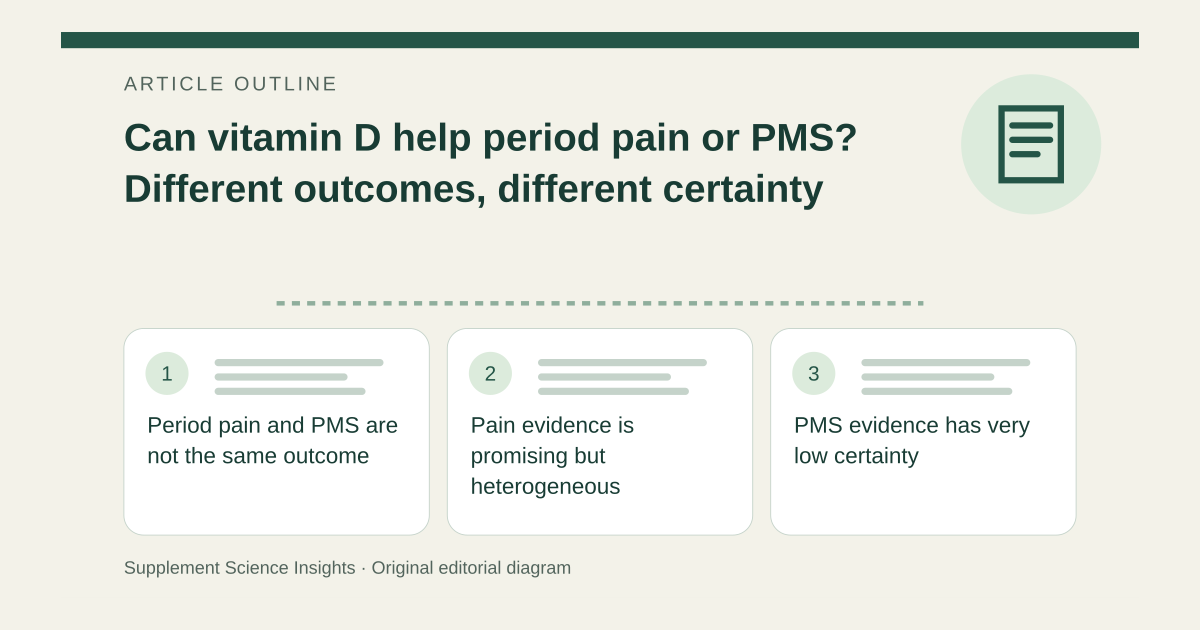
Period pain and PMS are not the same outcome
NHS describes painful periods separately from PMS, which involves symptoms arising before menstruation and easing after it begins. A study of pain during a period does not automatically demonstrate effects on premenstrual mood, cravings or fluid retention. Keeping a symptom diary can clarify the pattern. [1]
Pain evidence is promising but heterogeneous
A 2024 meta-analysis of eleven randomized studies reported lower pain intensity with vitamin D, with substantial variation across studies. The benefit appeared in primary dysmenorrhea, while the secondary-dysmenorrhea subgroup did not show a significant reduction. Pain caused by another condition should not be assumed to respond the same way. [2]
PMS evidence has very low certainty
A 2026 review of five randomized trials found lower total PMS severity and some physical and depressive symptom scores. It found no significant effects on anxiety, cravings or water retention. The authors rated the evidence very low certainty because of limitations and substantial variation, so a positive pooled result is not a dependable promise for an individual. [3]
A research regimen is not a self-treatment instruction
Studies use different doses, schedules and participants. These reviews do not establish a universal personal regimen, and high-dose vitamin D can cause excess calcium and kidney harm. Correcting deficiency can be reasonable within a care plan while menstrual symptoms receive condition-specific treatment. [4][2][3]
Use the symptom pattern to guide care
Imagine cramps improve but premenstrual mood symptoms remain. These are separate outcomes, so it would be misleading to call the whole condition treated. Discuss symptoms affecting daily life and do not delay assessment of a changing pattern while escalating a supplement. [1][3]
| Outcome | Evidence distinction |
|---|---|
| Primary period pain | Some trial benefit with variation |
| Secondary period pain | Benefit not established in the reviewed subgroup |
| Overall PMS severity | Positive pooled finding, very low certainty |
| Cravings or water retention | No significant effect in the recent review |
Sources for this article
- Period problems - NHS
Source consulted: 2026-09-21. This is a reference resource, not a claim that we conducted the studies or tested a product. - Vitamin D Supplementation for Patients with Dysmenorrhoea: A Meta-Analysis with Trial Sequential Analysis of Randomised Controlled Trials.
Source consulted: 2026-09-21. This is a reference resource, not a claim that we conducted the studies or tested a product. - Efficacy of Vitamin D Supplementation to Alleviate Premenstrual Syndrome Symptoms: A Systematic Review and Meta-Analysis of Randomized Controlled Trials.
Source consulted: 2026-09-21. This is a reference resource, not a claim that we conducted the studies or tested a product. - Vitamin D - Health Professional Fact Sheet
Source consulted: 2026-09-21. This is a reference resource, not a claim that we conducted the studies or tested a product.