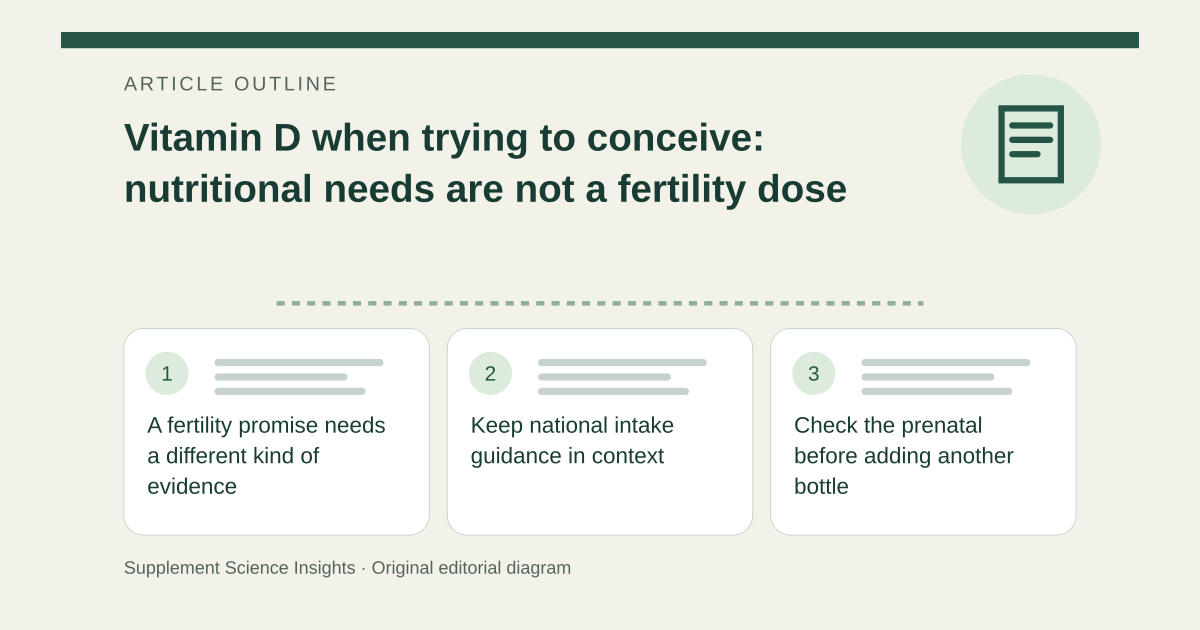
A fertility promise needs a different kind of evidence
NHS states there is no evidence that colecalciferol reduces fertility in men or women. That is not a finding that extra vitamin D improves fertility. Its pregnancy guidance addresses nutritional care and deficiency, rather than identifying a conception-enhancing dose. [1]
Keep national intake guidance in context
NIH ODS gives a US recommended intake of 15 micrograms, or 600 IU, per day for adults through age 70, including pregnancy. NHS recommends a 10-microgram, or 400-IU, daily supplement during pregnancy. One is a total-intake reference and the other a UK supplement recommendation; neither should be relabeled as a fertility treatment. [2][1]
Check the prenatal before adding another bottle
Many prenatal products already contain vitamin D. NHS advises checking the packet and notes that diagnosed deficiency may require a higher prescribed dose and extra tests. Tell the clinician that you are trying to conceive so the complete medication and supplement plan can be reviewed. [1]
Treat the identified problem rather than chasing a number
Imagine a prenatal already provides vitamin D and an advertisement recommends a larger dose for egg quality. Ask what evidence and clinical reason support that extra dose. If a deficiency is found, correct it under guidance; otherwise the advertisement has not established a new requirement. [1][2]
| Question | What determines the answer |
|---|---|
| Routine nutrition | Check total intake and prenatal contents |
| Confirmed deficiency | Individual treatment and monitoring |
| Fertility marketing | No dose established by this guidance |
Sources for this article
- Pregnancy, breastfeeding and fertility while taking colecalciferol - NHS
Source consulted: 2026-09-20. This is a reference resource, not a claim that we conducted the studies or tested a product. - Vitamin D - Health Professional Fact Sheet
Source consulted: 2026-09-20. This is a reference resource, not a claim that we conducted the studies or tested a product.