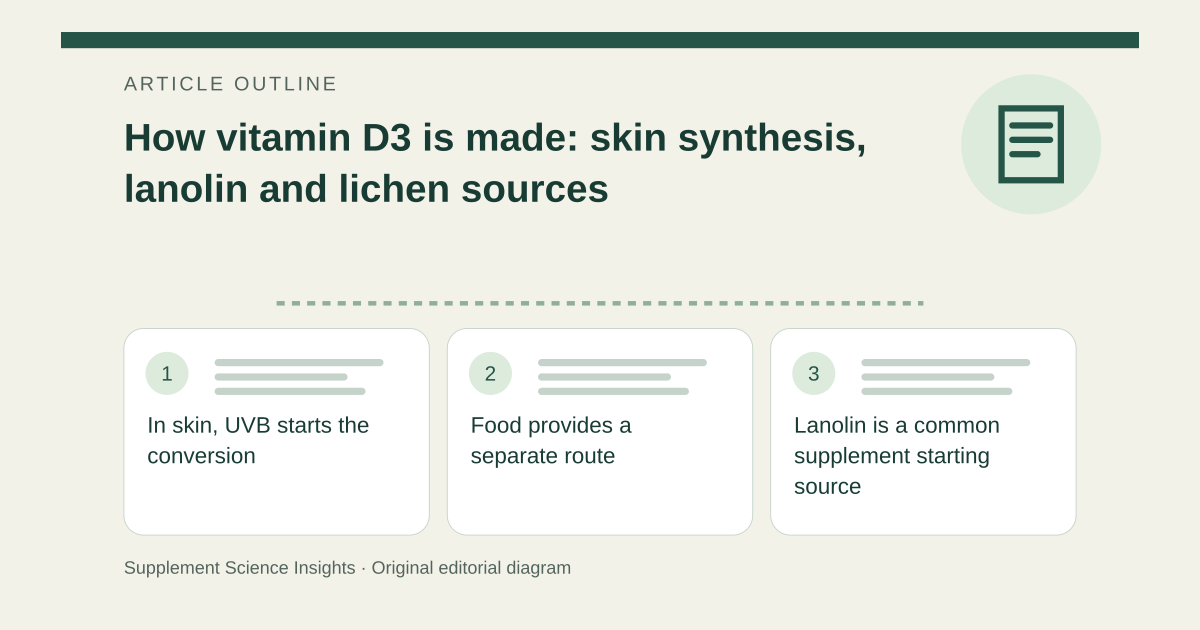
In skin, UVB starts the conversion
NIH describes ultraviolet-B light converting 7-dehydrocholesterol in skin to previtamin D3, which then becomes vitamin D3. This is not simply sunlight turning directly into a vitamin. Glass blocks the relevant UVB, and skin production varies with exposure and individual factors; this mechanism is not a prescription for unprotected sun exposure. [1]
Food provides a separate route
Vitamin D can be obtained from foods including fatty fish and fortified products. A fortified food contains an added vitamin ingredient rather than requiring the person to make it through skin exposure. Food labels and composition data are needed to identify the amount and form. [1]
Lanolin is a common supplement starting source
NIH states that D3 is typically manufactured by irradiating 7-dehydrocholesterol obtained from lanolin from sheep wool. D2 commonly follows a different route using irradiation of ergosterol in yeast. These manufacturing descriptions distinguish the starting material and vitamin form; they do not mean a capsule contains raw wool. [1]
Lichen-derived D3 allows another sourcing option
NIH also identifies animal-free D3 sourced from lichen. D3 on a label alone does not establish vegan sourcing. Ask the manufacturer about the ingredient and processing, and check the capsule shell and other ingredients as well if avoiding animal products. [1][2]
Production is not the final activation step
Vitamin D from skin, food or supplements undergoes further processing in the body, first mainly in the liver and then mainly in the kidneys, to form active vitamin D. Source and activation are different questions. A manufacturing claim does not establish the right amount for an individual. [1]
Check the complete product
Imagine two products both list cholecalciferol, another name for D3. One identifies lanolin and the other lichen. They disclose different sources of the same vitamin form, but the serving amount, shell and other ingredients still need comparison. [1][2]
| Route | Starting distinction |
|---|---|
| Skin | UVB acts on 7-dehydrocholesterol |
| Typical commercial D3 | Lanolin-derived starting material |
| Animal-free D3 | Verify lichen source and complete formula |
Sources for this article
- Vitamin D - Health Professional Fact Sheet
Source consulted: 2026-09-21. This is a reference resource, not a claim that we conducted the studies or tested a product. - Dietary Supplements: What You Need to Know
Source consulted: 2026-09-21. This is a reference resource, not a claim that we conducted the studies or tested a product.