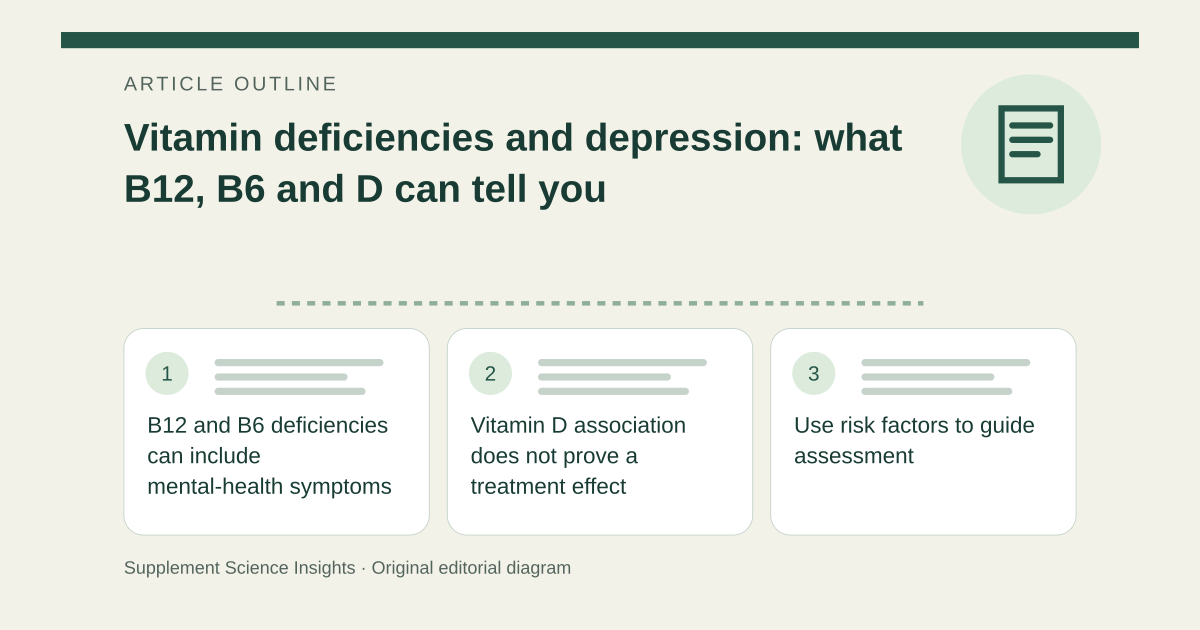
B12 and B6 deficiencies can include mental-health symptoms
NICE notes that B12 deficiency can be associated with depression, anxiety or psychosis. ODS lists depression and confusion among B6-deficiency features. These are possible manifestations, not proof that a person with low mood has either deficiency or that a B-complex product is an antidepressant. [1][2]
Vitamin D association does not prove a treatment effect
ODS describes an association between low vitamin D status and depression but reports that clinical trials have not established prevention or treatment of depressive symptoms from supplementation. Treating a vitamin D deficiency for its nutritional indications and treating depression remain separate decisions. [3]
Use risk factors to guide assessment
Discuss dietary restriction, absorption problems, medicines and other symptoms with the clinician. Testing should answer a clinical question rather than a promise that a broad panel will identify the cause of every mood problem. A normal blood count alone does not exclude B12 deficiency. [1]
Continue depression care while addressing nutrition
NCCIH advises against replacing conventional depression care or delaying assessment in favor of complementary approaches. A supplement can also have adverse effects; excess B6 can injure sensory nerves. Review the whole regimen rather than assuming that vitamins are harmless at any amount. [4][2]
Do not turn one lab result into the whole explanation
Imagine a patient has both depression and low B12. Treat the deficiency appropriately and continue to assess the mood symptoms and response. Neither finding makes the other condition irrelevant, and a supplement response cannot be promised before the causes are understood. [1][4]
| Finding | What it does not establish |
|---|---|
| Low B12 with low mood | That B12 is the only cause |
| Low vitamin D association | That supplements are an antidepressant |
| B-complex label | An evidence-based depression regimen |
Sources for this article
- Recommendations | Vitamin B12 deficiency in over 16s: diagnosis and management | Guidance | NICE
Source consulted: 2026-09-21. This is a reference resource, not a claim that we conducted the studies or tested a product. - Vitamin B6 - Health Professional Fact Sheet
Source consulted: 2026-09-21. This is a reference resource, not a claim that we conducted the studies or tested a product. - Vitamin D - Health Professional Fact Sheet
Source consulted: 2026-09-21. This is a reference resource, not a claim that we conducted the studies or tested a product. - 8 Things To Know About Depression and Complementary Health Approaches | NCCIH
Source consulted: 2026-09-21. This is a reference resource, not a claim that we conducted the studies or tested a product.