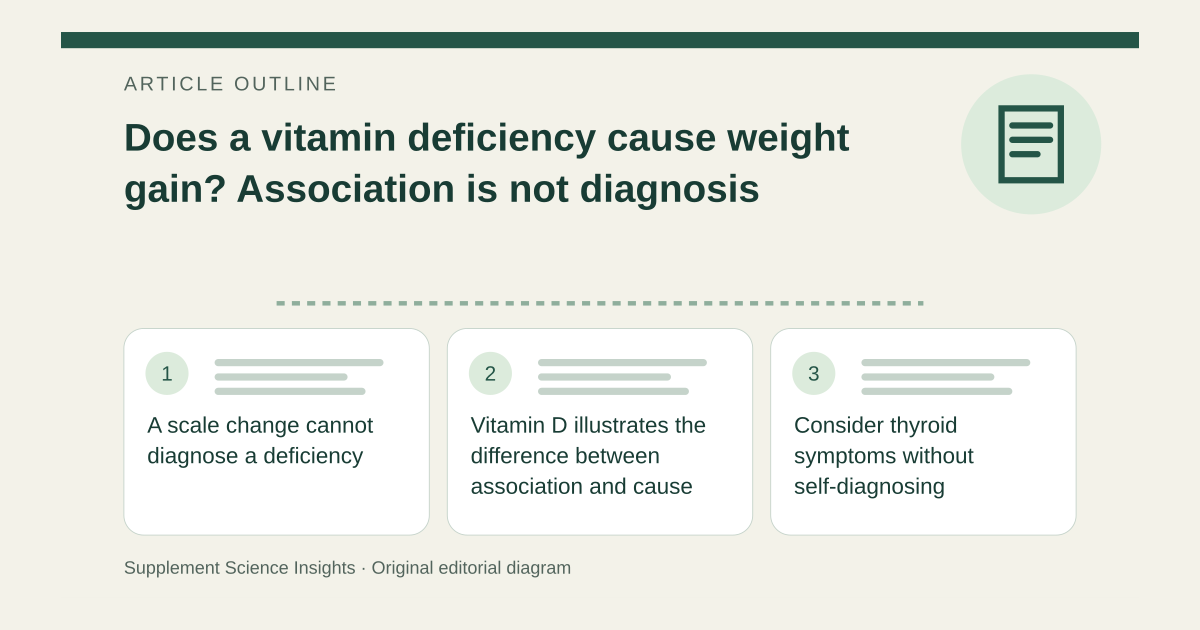
A scale change cannot diagnose a deficiency
Nutrients support normal metabolism, but that fact does not show that taking more will reverse weight gain. Review the timing and pattern of change, food and drink intake, activity, medicines and symptoms instead of choosing a vitamin from a metabolism claim. [1][2]
Vitamin D illustrates the difference between association and cause
ODS notes that people with obesity often have lower circulating vitamin D levels. Its evidence review does not support using vitamin D supplements to promote weight loss. A deficiency may still warrant correction for health reasons, but weight loss should not be promised as the expected result. [3]
Consider thyroid symptoms without self-diagnosing
An underactive thyroid can cause weight gain, fatigue, cold intolerance and dry skin, but NIDDK emphasizes that these symptoms are common and do not by themselves establish hypothyroidism. Appropriate testing is needed. Thyroid hormone replacement, when indicated, is different from a general vitamin supplement. [2]
Do not assume iodine is the missing answer
Iodine is a mineral needed for thyroid hormone production, but most hypothyroidism in the cited US guidance is not explained by iodine deficiency. Excess iodine, including kelp supplements, can worsen some thyroid conditions. A thyroid-support label is not a reason to self-treat unexplained weight gain. [2]
Separate the two treatment goals
Imagine weight gain and a low vitamin D result are found at the same visit. Follow the appropriate deficiency plan and separately review weight-related factors. If weight does not fall after replacement, that alone does not mean the vitamin dose should be increased. [3][1]
| Observation | What it does not establish |
|---|---|
| Low vitamin D and higher weight | That low D caused the gain |
| Fatigue with weight gain | A thyroid diagnosis without assessment |
| No weight loss after replacement | A need for higher vitamin doses |
Sources for this article
- Dietary Supplements: What You Need to Know
Source consulted: 2026-09-21. This is a reference resource, not a claim that we conducted the studies or tested a product. - Hypothyroidism (Underactive Thyroid) - NIDDK
Source consulted: 2026-09-21. This is a reference resource, not a claim that we conducted the studies or tested a product. - Vitamin D - Health Professional Fact Sheet
Source consulted: 2026-09-21. This is a reference resource, not a claim that we conducted the studies or tested a product.