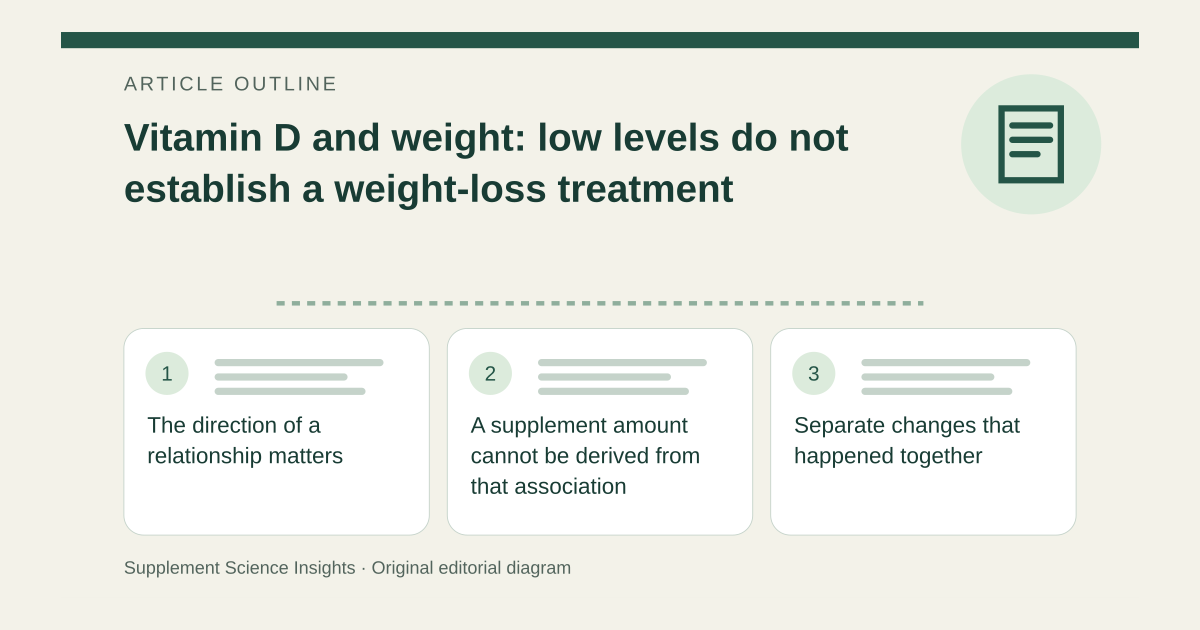
The direction of a relationship matters
ODS reports that people with obesity often have lower circulating vitamin D. This association alone does not show that low vitamin D caused the higher body weight. Body composition and related factors can affect measured status. [1]
The source also describes increases in vitamin D levels among people who lost weight through interventions such as diet and exercise. A change in vitamin D after weight loss does not demonstrate weight loss caused by vitamin D. [1]
A supplement amount cannot be derived from that association
The ODS synthesis concludes that available supplementation research does not support vitamin D for promoting weight loss. It describes trials without calorie restriction that found no effect on body weight or fat mass relative to placebo. [1]
A clinician may still address an identified deficiency for nutritional and medical reasons. That does not turn the replacement plan into a fat-loss prescription. Excess supplemental vitamin D can cause hypercalcemia and other serious harm; escalating intake is not an evidence-based weight strategy. [1]
Separate changes that happened together
Imagine a person changes diet, becomes more active and begins vitamin D at the same time, then loses weight. Their experience cannot isolate the supplement’s contribution. The simultaneous changes prevent the before-and-after story from functioning as a controlled comparison.
| Observation | Meaning |
|---|---|
| Diet and activity changed | Potential contributors |
| Vitamin D added too | Another simultaneous change |
| Weight decreased | Does not isolate a vitamin effect |
Sources for this article
- NIH ODS: Vitamin D
Source consulted: 2026-09-17. This is a reference resource, not a claim that we conducted the studies or tested a product.