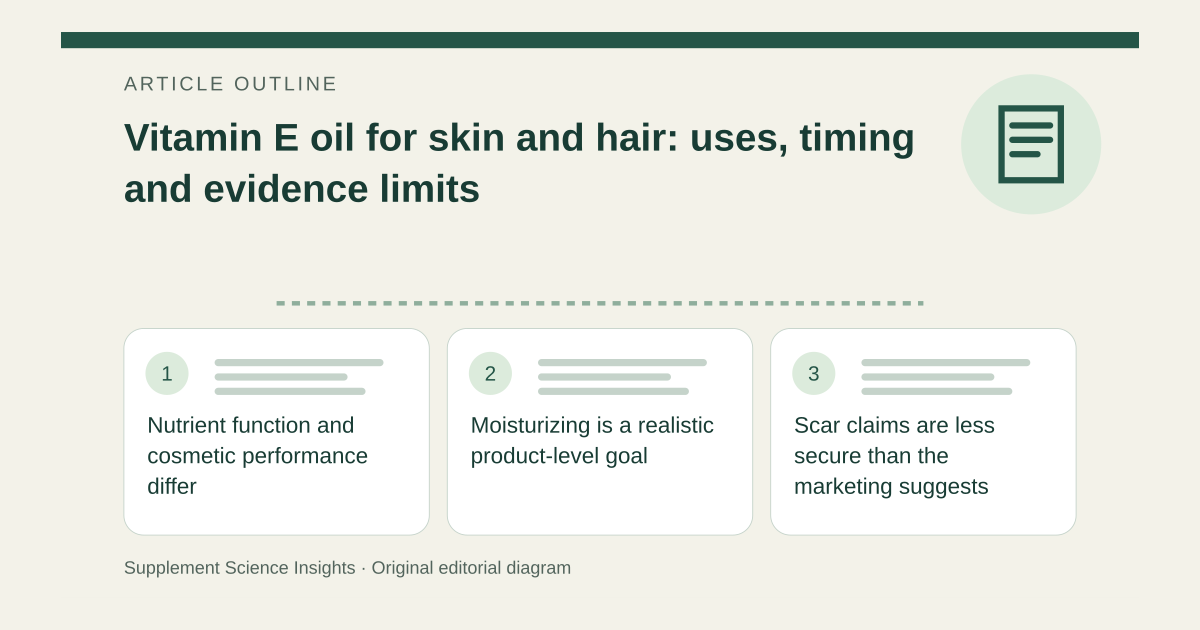
Nutrient function and cosmetic performance differ
Vitamin E is a fat-soluble antioxidant. An oral supplement, a cosmetic oil and a cream containing tocopherol are different products. Read intended use and other ingredients; breaking open a supplement capsule does not turn it into a tested facial, scalp or eye-area treatment. [1][2]
Moisturizing is a realistic product-level goal
A tolerated cosmetic can help dry skin depending on the complete formulation. Follow its directions and test a new product on a small area first. The sources here do not establish a universal morning or evening advantage for vitamin E oil. Daytime use still requires appropriate sun protection. [2][3]
Scar claims are less secure than the marketing suggests
A 2016 systematic review of six prospective studies found insufficient evidence to justify widespread vitamin E monotherapy for scar appearance. Some studies reported contact dermatitis, itching or rash. The abstract does not establish one reaction rate for every product or predict an individual result. [4]
A scalp oil is not a diagnosis or regrowth plan
Hair thinning has different causes, and dermatology guidance emphasizes assessing those causes. A vitamin E ingredient or smoother-feeling hair does not demonstrate new follicular growth. Avoid improvised concentrated recipes and obtain assessment for persistent loss or an irritated scalp. [5][3]
Choose the routine for the actual concern
Imagine a facial oil reduces dryness but causes itching after repeated use. Stop the irritating product rather than applying more for a promised repair effect. A clinician can distinguish dryness, dermatitis, scarring and other concerns that require different care. [3][2]
| Use | Important distinction |
|---|---|
| Face moisturizer | Whole formulation and tolerance |
| Scar treatment | Benefit not reliably established |
| Hair-growth claim | Conditioning is not new growth |
Sources for this article
- Vitamin E - Health Professional Fact Sheet
Source consulted: 2026-09-21. This is a reference resource, not a claim that we conducted the studies or tested a product. - How to pick the right moisturizer for your skin
Source consulted: 2026-09-21. This is a reference resource, not a claim that we conducted the studies or tested a product. - How to test skin care products
Source consulted: 2026-09-21. This is a reference resource, not a claim that we conducted the studies or tested a product. - The Role of Topical Vitamin E in Scar Management: A Systematic Review.
Source consulted: 2026-09-21. This is a reference resource, not a claim that we conducted the studies or tested a product. - Hair loss: Diagnosis and treatment
Source consulted: 2026-09-21. This is a reference resource, not a claim that we conducted the studies or tested a product.