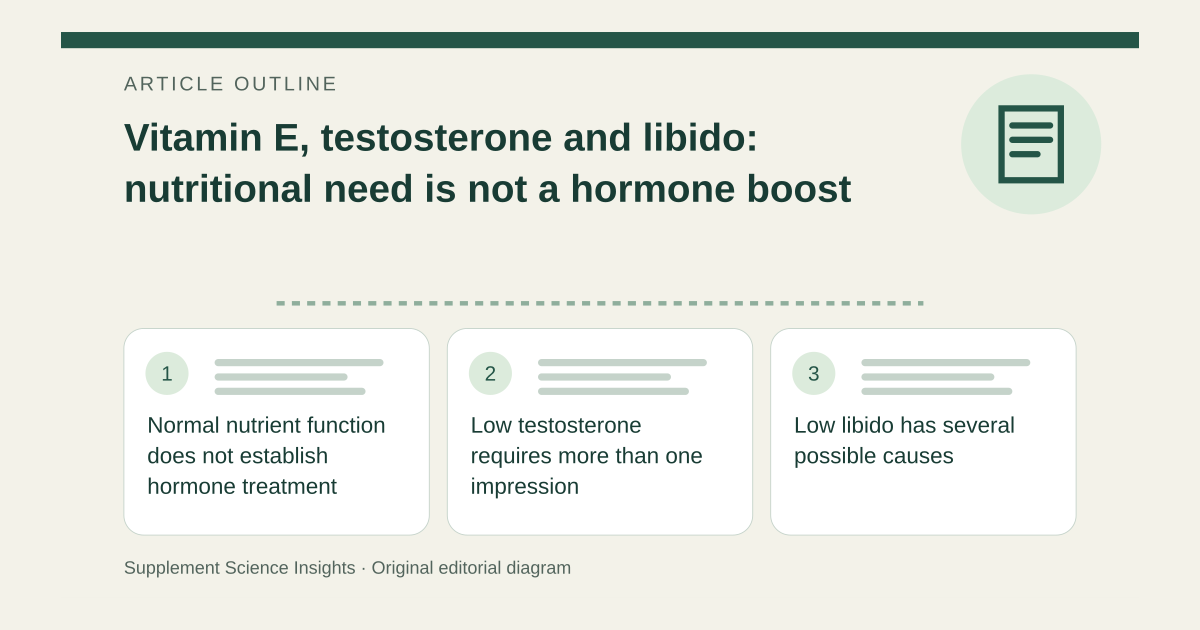
Normal nutrient function does not establish hormone treatment
NIH describes vitamin E’s antioxidant and other physiological roles. That does not establish a dose that predictably raises testosterone in people with adequate nutrition. The inspected endocrine guidance bases treatment on the cause and a confirmed clinical diagnosis. [1][2]
Low testosterone requires more than one impression
The Endocrine Society describes diagnosis using compatible symptoms and repeated early-morning testosterone measurements. Illness, medicines and other circumstances can affect results. A single low value or low energy alone should not be treated as proof that vitamin E is missing. [2]
Low libido has several possible causes
NHS lists relationship factors, stress, mood, medicines, sexual discomfort and hormone changes among contributors. Improving a nutrient intake may address a genuine nutritional need, but it does not automatically resolve those causes. Seek a review when the change is persistent or troubling. [3][1]
Extra vitamin E has risks
High-dose vitamin E can increase bleeding risk and interact with medicines. More is not a reliable way to obtain a larger hormonal effect. Discuss any proposed supplement alongside the full treatment plan rather than substituting it for evaluation. [1][4]
Choose the next step by the symptom
Imagine someone buys vitamin E for low desire after starting a new medicine. Review the medicine and wider context with the prescriber instead of stopping it independently or assuming testosterone must be low. Hormone testing, when appropriate, answers a different question from the product’s marketing. [3][2]
| Question | Appropriate focus |
|---|---|
| Low desire | Review multiple possible causes |
| Possible low testosterone | Symptoms and repeated testing |
| Nutrient inadequacy | Targeted nutrition assessment |
| High-dose vitamin E | Bleeding and interaction risks |
Sources for this article
- Vitamin E - Health Professional Fact Sheet
Source consulted: 2026-09-21. This is a reference resource, not a claim that we conducted the studies or tested a product. - Hypogonadism in Men | Endocrine Society
Source consulted: 2026-09-21. This is a reference resource, not a claim that we conducted the studies or tested a product. - Low sex drive (loss of libido) - NHS
Source consulted: 2026-09-21. This is a reference resource, not a claim that we conducted the studies or tested a product. - Dietary Supplements: What You Need to Know
Source consulted: 2026-09-21. This is a reference resource, not a claim that we conducted the studies or tested a product.