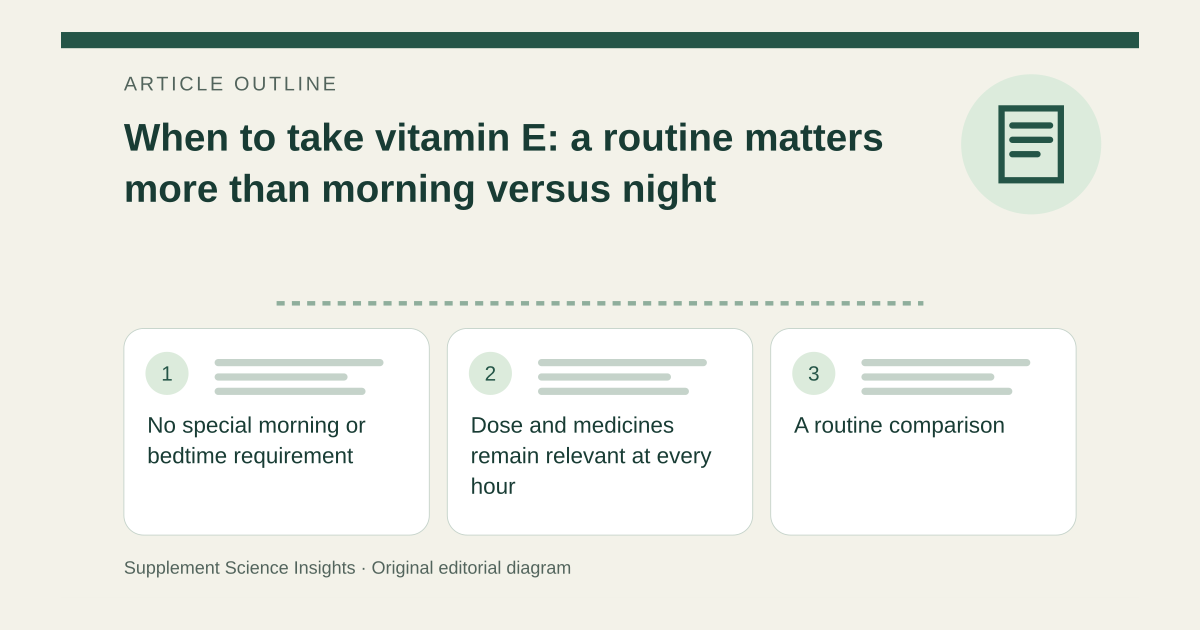
No special morning or bedtime requirement
Vitamin E is fat-soluble and participates in antioxidant and immune functions. Those roles do not establish that breakfast, dinner or bedtime produces a superior clinical effect. A convenient meal-based routine may help someone remember a supplement, but it is a practical choice rather than evidence of a special timing benefit. [1]
Dose and medicines remain relevant at every hour
Large supplemental amounts can increase bleeding risk, especially with anticoagulant or antiplatelet medicines. Taking a high dose at night does not remove that risk or resolve an interaction. People using prescribed vitamin E for a specific condition should follow that regimen rather than changing the schedule from a general nutrition article. [1]
A routine comparison
Imagine someone has been advised to use a particular product and remembers it better with dinner than breakfast. Check that choice against its directions and medication plan. If two products both supply vitamin E, add their amounts even if one is taken in the morning and the other at night; spacing them does not reduce the daily total. [1]
| Hypothetical choice | What changes |
|---|---|
| Breakfast versus dinner | Convenience and adherence |
| Same amount at a different hour | Daily total unchanged |
| Two overlapping products | Both contribute to intake |
Sources for this article
- Vitamin E - Health Professional Fact Sheet
Source consulted: 2026-09-20. This is a reference resource, not a claim that we conducted the studies or tested a product.