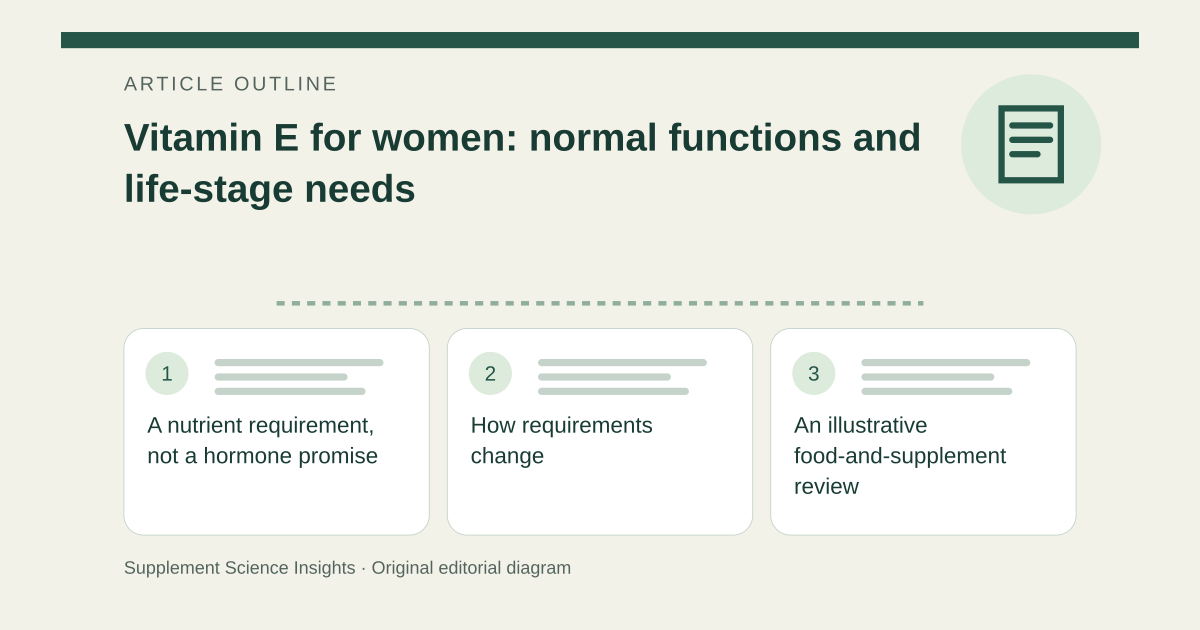
A nutrient requirement, not a hormone promise
Vitamin E has established roles in normal physiology. These do not make extra vitamin E a general fertility, hormone-balancing or anti-aging treatment. The relevant nutritional question is whether the person obtains enough, with any condition-specific use assessed separately. [1]
How requirements change
ODS gives the same 15 mg daily recommendation for females and males aged fourteen and older. Pregnancy does not increase this figure, while lactation raises it to 19 mg. Nuts, seeds, vegetable oils and some fortified foods contribute. These are total-intake reference values, not automatic instructions to add a supplement of that size on top of the diet. [1]
An illustrative food-and-supplement review
Imagine a woman estimates 10 mg daily from her usual foods and takes a multivitamin providing another 5 mg. The combined 15 mg matches the general adult reference arithmetically. If she is lactating, the reference differs. Individual assessment and food variability still matter, and a much larger capsule is not necessarily more beneficial. [1]
| Hypothetical intake | Total |
|---|---|
| 10 mg from food + 5 mg supplement | 15 mg |
| Adult pregnancy reference | 15 mg daily |
| Lactation reference | 19 mg daily |
Sources for this article
- Vitamin E - Health Professional Fact Sheet
Source consulted: 2026-09-20. This is a reference resource, not a claim that we conducted the studies or tested a product.