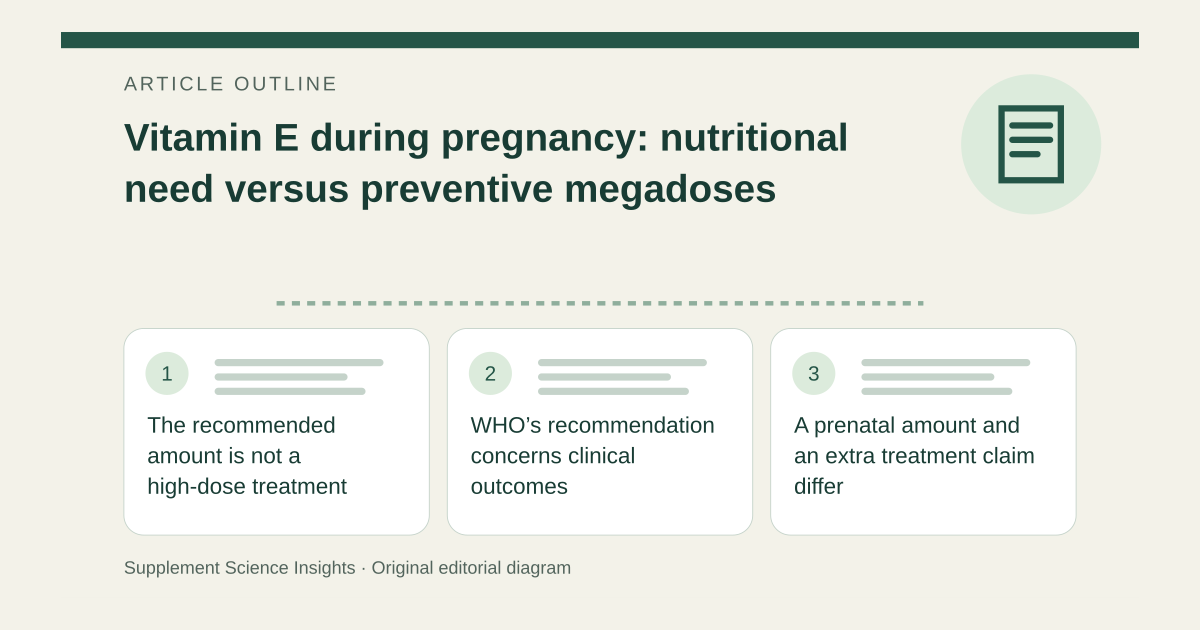
The recommended amount is not a high-dose treatment
The U.S. recommended dietary allowance for vitamin E during pregnancy is 15 mg daily of alpha-tocopherol for ages 14 and older. It describes total intake. A diet and prenatal formulation can both contribute, so a separate supplement is not automatically required. [1]
Keep units and nutrient forms visible when comparing products. An amount stated in international units should not be treated as the same numerical amount in milligrams. [1]
WHO’s recommendation concerns clinical outcomes
WHO recommends against vitamin E and C supplementation to improve maternal and perinatal outcomes. Its evidence summary largely concerns combined interventions, commonly evaluated for preventing pre-eclampsia. The combination generally did not improve several major outcomes and was associated with increased abdominal pain and rupture of membranes at term. [2]
Because many trials supplied both vitamins, their results should not be described as a clean test of vitamin E alone. Equally, an antioxidant mechanism does not override the clinical results. These are findings from WHO’s evidence synthesis, not an independent reanalysis here. [2]
A prenatal amount and an extra treatment claim differ
Imagine a prenatal contains a nutritional amount of vitamin E and a separate product promises pregnancy protection through a much larger antioxidant dose. The latter claim needs clinical evidence; the nutrient’s essential status does not supply it. Discuss any proposed addition with prenatal care.
| Situation | Interpretation |
|---|---|
| 15 mg/day | Pregnancy RDA from all sources |
| Combined trials | Do not isolate vitamin E |
| Extra high dose | Not justified by essentiality |
Sources for this article
- NIH ODS: Vitamin E
Source consulted: 2026-09-17. This is a reference resource, not a claim that we conducted the studies or tested a product. - WHO: Recommendations on Antenatal Care — Recommendation A.8
Source consulted: 2026-09-17. This is a reference resource, not a claim that we conducted the studies or tested a product.