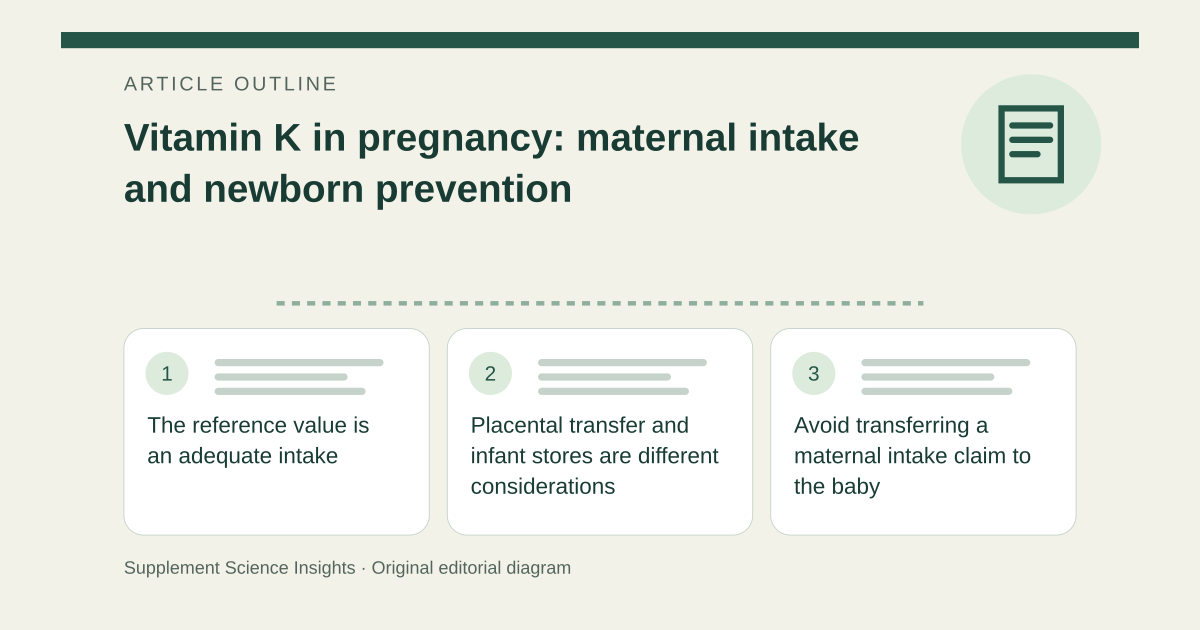
The reference value is an adequate intake
The U.S. adequate intake for vitamin K in pregnancy is 90 micrograms daily for adults and 75 micrograms for ages 14–18. These values are the same as for nonpregnant females in the corresponding age groups. They are not evidence that extra vitamin K treats pregnancy complications. [1]
An adequate intake is used when evidence is insufficient to set a recommended dietary allowance. Leafy green vegetables and vegetable oils provide vitamin K, and the intake figure includes food rather than specifying a supplement-only amount. [1]
Placental transfer and infant stores are different considerations
ODS explains that vitamin K transfer across the placenta is poor and newborns are vulnerable to vitamin K deficiency bleeding. It describes the pediatric recommendation for an intramuscular vitamin K dose at birth to prevent that condition. [1]
A maternal prenatal product therefore cannot be assumed to deliver the same protection as the infant intervention. They involve different recipients, routes and purposes. Ask the maternity and newborn-care team about the infant’s preventive plan rather than changing the maternal dose to substitute for it. [1]
Avoid transferring a maternal intake claim to the baby
Imagine a parent eats vitamin-K-rich vegetables throughout pregnancy. That supports maternal nutrition, but it does not establish that a newborn can skip vitamin K prophylaxis. Adequate maternal intake and infant prevention can both be relevant at the same time.
| Situation | Interpretation |
|---|---|
| 90 micrograms/day | Adult maternal adequate intake |
| Placental transfer | Limited |
| Newborn prophylaxis | Separate preventive intervention |
Sources for this article
- NIH ODS: Vitamin K
Source consulted: 2026-09-17. This is a reference resource, not a claim that we conducted the studies or tested a product.