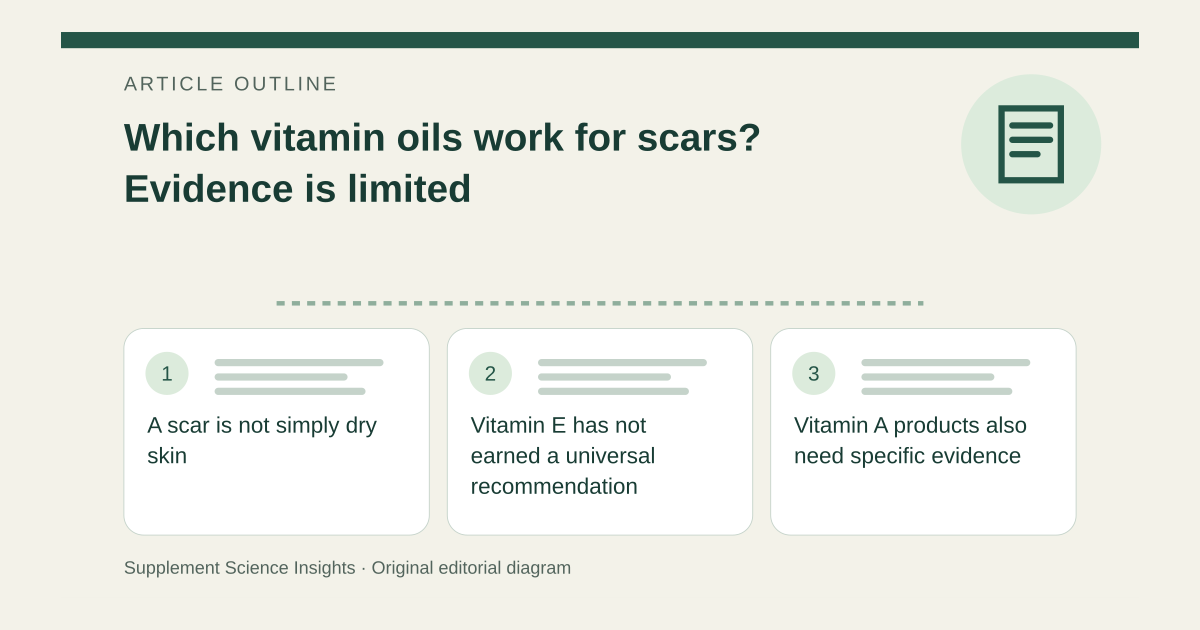
A scar is not simply dry skin
A moisturizer can soften a dry surface without remodeling the scar underneath. AAD describes different treatments for raised, depressed and discolored scars. The type of scar and whether the wound has closed affect what is appropriate. [1]
Vitamin E has not earned a universal recommendation
A systematic review found insufficient evidence to justify widespread topical vitamin E alone for scar appearance. Some findings involved combinations, which do not isolate the vitamin. Contact dermatitis, itching and rash were reported in some studies. [2]
Vitamin A products also need specific evidence
AAD says research on nonprescription scar products containing vitamin A or E is limited. A product containing a familiar vitamin is not automatically effective for a raised surgical scar or an indented acne scar. Do not treat evidence for pigmentation or acne as proof of scar removal. [1]
Better-supported options depend on the scar
AAD describes silicone sheets or gels for selected raised scars, generally after the wound closes, as well as procedures chosen by scar type. Those treatments also have limitations and possible irritation. An open wound needs wound-care instructions rather than improvised capsule oil. [1]
Define success before applying a product
Imagine an oil makes a healed scar feel less dry but its height is unchanged. That may be a moisturizing effect, not proof of structural scar improvement. Track the actual concern and discuss persistent raised, painful or movement-limiting scars with a clinician. [1][2]
| Observed change | What it may mean |
|---|---|
| Less dryness | Surface moisturization |
| Less pigment | Not necessarily scar remodeling |
| Less height or stiffness | A different structural outcome |
| Rash or itching | Possible irritation, not evidence of healing |
Sources for this article
- Scars: Diagnosis and treatment
Source consulted: 2026-09-21. This is a reference resource, not a claim that we conducted the studies or tested a product. - The Role of Topical Vitamin E in Scar Management: A Systematic Review.
Source consulted: 2026-09-21. This is a reference resource, not a claim that we conducted the studies or tested a product.