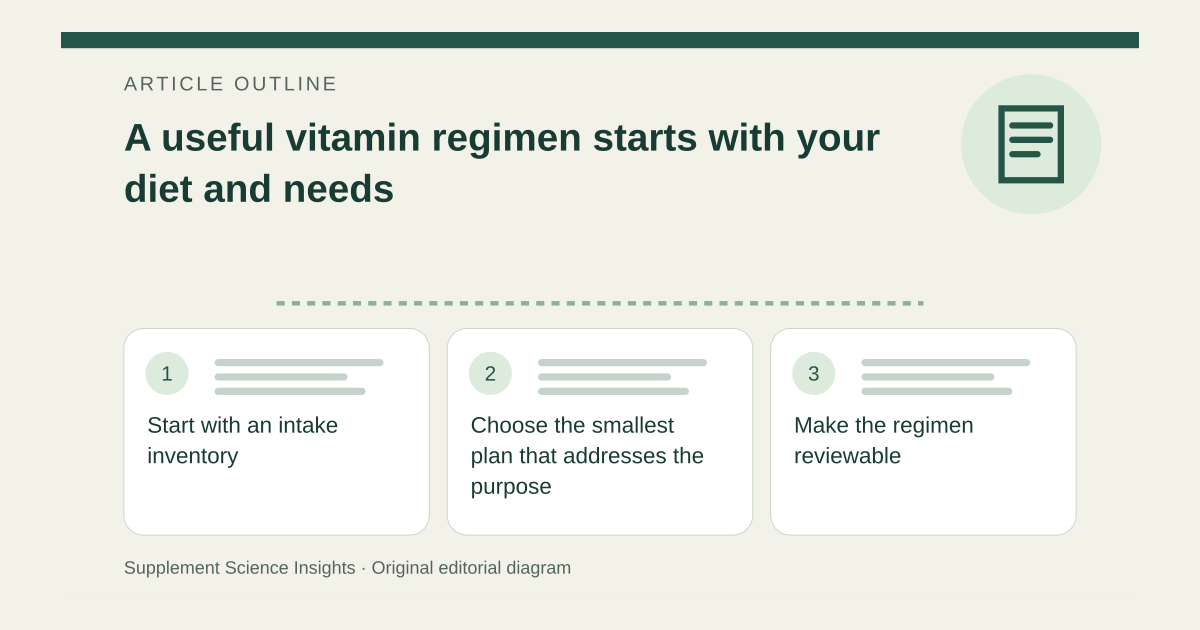
Start with an intake inventory
List foods regularly eaten or avoided, fortified drinks and all current supplements. A multivitamin adds to that intake; it does not replace the inventory. People with restricted diets or poor appetite may have different needs from someone eating a varied diet, and clinical conditions can require a more specific assessment. [1]
Choose the smallest plan that addresses the purpose
A basic multi, a targeted nutrient or no added product can each be reasonable depending on the assessment. The word multivitamin does not guarantee a standard formula. Read amounts rather than counting how many nutrients appear on the front. More ingredients do not establish better results, and overlapping products can raise intake unnecessarily. [1]
Make the regimen reviewable
Imagine someone takes a multi, a fortified shake and a separate zinc tablet. Record each amount and frequency before adding another product. Bring the list and the reason for each item to a pharmacist or clinician, especially when medicines or a medical condition are involved. This creates a decision about an actual gap rather than an automatic shopping list. [2]
| Example | Interpretation |
|---|---|
| Dietary restriction | Identify the affected nutrients |
| Several products | Check overlapping amounts |
| Defined clinical need | Use an individualized plan |
Sources for this article
- Multivitamin/mineral Supplements
Source consulted: 2026-09-20. This is a reference resource, not a claim that we conducted the studies or tested a product. - Dietary Supplements: What You Need to Know
Source consulted: 2026-09-20. This is a reference resource, not a claim that we conducted the studies or tested a product.