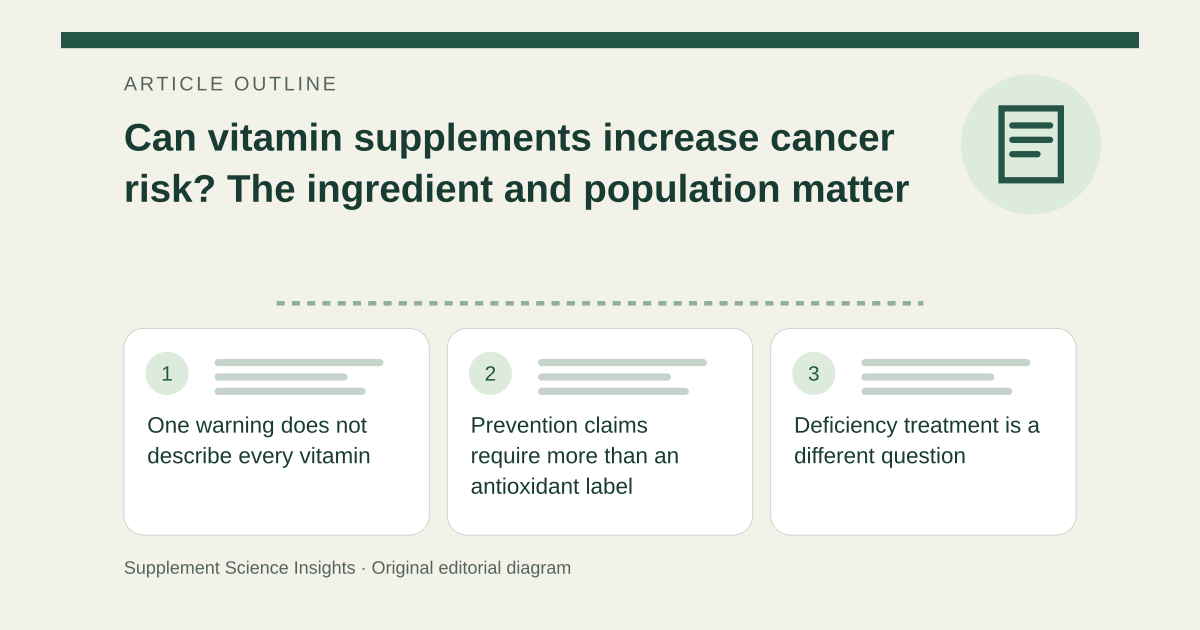
One warning does not describe every vitamin
The USPSTF identifies increased lung-cancer incidence with beta-carotene supplementation in people who smoke or have occupational asbestos exposure. This is a specific supplement warning, not a reason to conclude that all vitamins or vegetables have the same effect. [1]
Prevention claims require more than an antioxidant label
The USPSTF recommends against beta-carotene and vitamin E supplements for primary prevention of cancer or cardiovascular disease. An antioxidant mechanism alone does not establish a favorable clinical outcome. Read a product’s claimed purpose separately from its biochemical description. [1]
Deficiency treatment is a different question
That preventive recommendation addresses community-dwelling nonpregnant adults and excludes known nutritional deficiency and certain other groups. It should not be used to stop clinician-directed replacement without reviewing why it was prescribed. The indication changes the decision. [1]
During cancer treatment, interactions also matter
Supplements can change how anticancer medicines are handled by the body. Someone undergoing treatment needs an oncology review of the complete formula, even when a product is marketed for general wellness rather than cancer prevention. [2]
Respond to a headline with the actual exposure
Imagine a headline says vitamins cause cancer. Before applying it, identify the nutrient, dose, study population and outcome. A warning about a particular preventive supplement does not answer whether a prescribed replacement or an ordinary meal should change. [3]
| Situation | Interpretation |
|---|---|
| Beta-carotene in a higher-risk population | Specific harm signal |
| Prescribed deficiency replacement | Different clinical purpose |
| Cancer treatment | Check drug interactions |
Sources for this article
- Recommendation: Vitamin, Mineral, and Multivitamin Supplementation to Prevent Cardiovascular Disease and Cancer: Preventive Medication | United States Preventive Services Taskforce
Source consulted: 2026-09-20. This is a reference resource, not a claim that we conducted the studies or tested a product. - Cancer Therapy Interactions With Foods and Dietary Supplements - NCI
Source consulted: 2026-09-20. This is a reference resource, not a claim that we conducted the studies or tested a product. - Dietary Supplements: What You Need to Know
Source consulted: 2026-09-20. This is a reference resource, not a claim that we conducted the studies or tested a product.