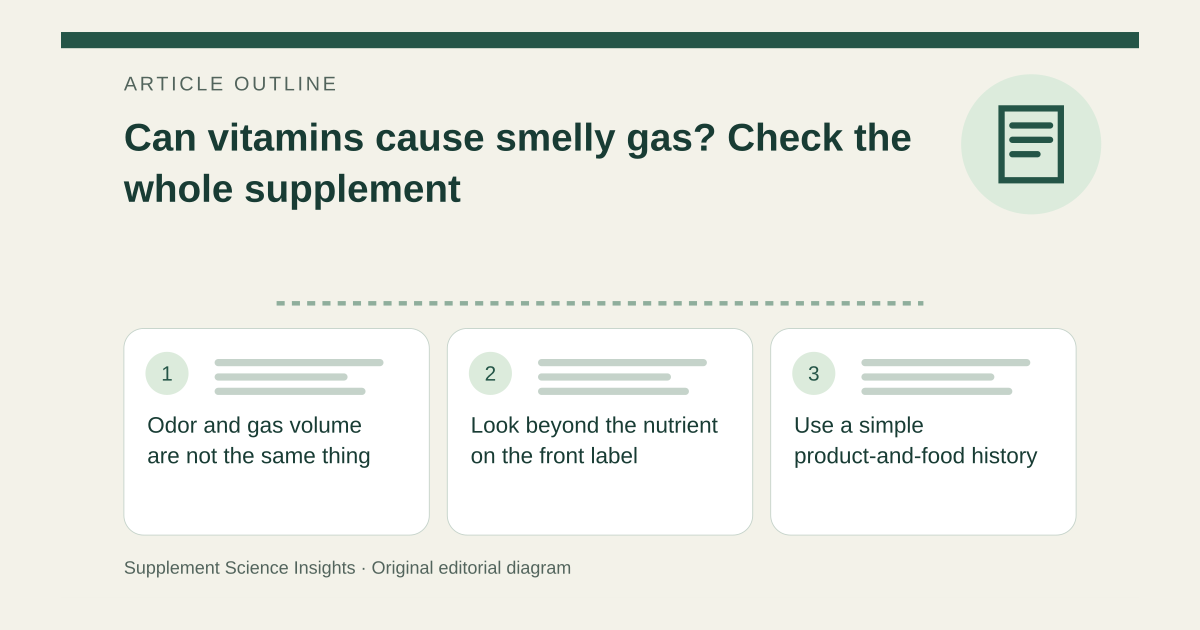
Odor and gas volume are not the same thing
NIDDK explains that gas comes from swallowed air and bacterial breakdown of undigested carbohydrates, while sulfur can contribute to odor. A stronger smell is not a direct measurement of iron, zinc or vitamin levels. Timing can suggest a trigger but cannot identify it alone. [1]
Look beyond the nutrient on the front label
NIDDK lists certain sugar alcohols and excess fiber as possible gas triggers. If a gummy or powder contains these ingredients, they deserve consideration alongside the vitamin itself. Iron and zinc can cause gastrointestinal effects, but those facts do not prove that either specifically caused a sulfur smell. [2][3][4]
Use a simple product-and-food history
Imagine gas started after a fiber-containing vitamin gummy and a diet change. Record both changes and discuss persistent symptoms rather than adding another gut supplement. Seek assessment when gas changes suddenly or occurs with abdominal pain, diarrhea, constipation or unintended weight loss. [1]
| Observation | Appropriate distinction |
|---|---|
| Vitamin name | Not the complete ingredient list |
| Sugar alcohol or added fiber | Potential formulation-related trigger |
| Persistent symptoms with pain or weight loss | Needs assessment |
Sources for this article
- Symptoms & Causes of Gas in the Digestive Tract - NIDDK
Source consulted: 2026-09-20. This is a reference resource, not a claim that we conducted the studies or tested a product. - Eating, Diet, & Nutrition for Gas in the Digestive Tract - NIDDK
Source consulted: 2026-09-20. This is a reference resource, not a claim that we conducted the studies or tested a product. - Iron - Health Professional Fact Sheet
Source consulted: 2026-09-20. This is a reference resource, not a claim that we conducted the studies or tested a product. - Zinc - Health Professional Fact Sheet
Source consulted: 2026-09-20. This is a reference resource, not a claim that we conducted the studies or tested a product.