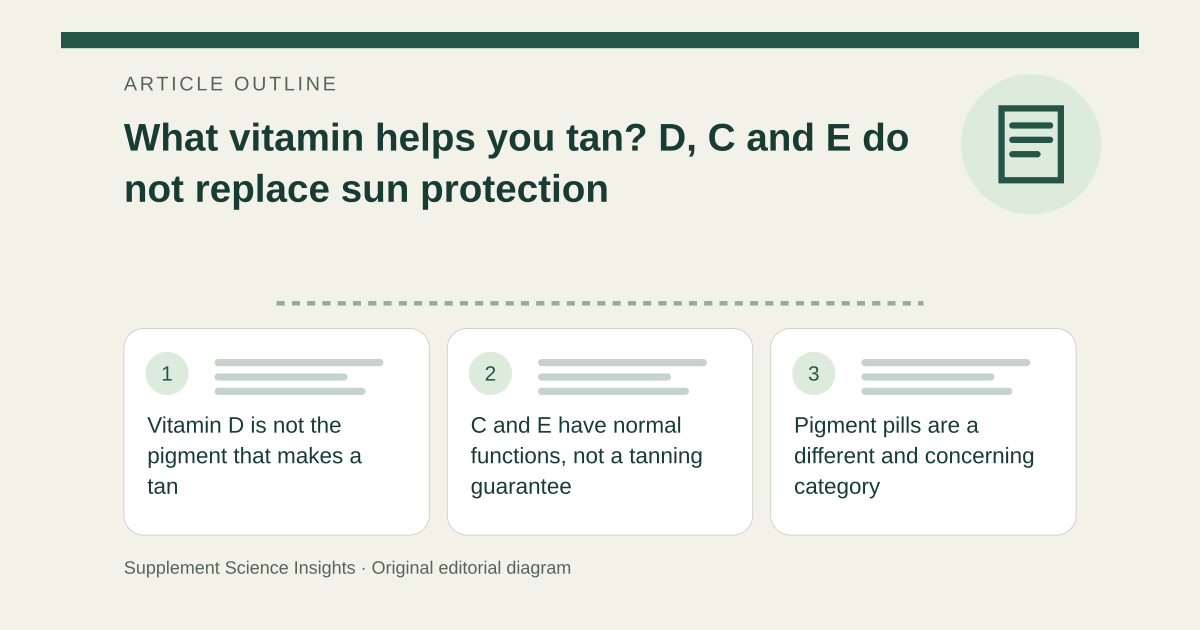
Vitamin D is not the pigment that makes a tan
UVB can initiate vitamin D synthesis in skin, but vitamin D is not melanin. Food and supplements can supply the nutrient without tanning. A low vitamin D result is not a reason to pursue a darker skin color as a treatment target. [1]
C and E have normal functions, not a tanning guarantee
Vitamin C supports collagen formation and vitamin E has antioxidant roles. Those functions do not establish that extra oral doses create a tan, prevent sunburn or replace sunscreen. More of a nutrient is not automatically more protection. [2][3][4]
Pigment pills are a different and concerning category
FDA explains that canthaxanthin-containing tanning pills can color skin through pigment deposition rather than increased melanin. The agency has not approved that use and describes adverse effects, including deposits in the eyes. Color change does not establish UV protection. [5]
Keep cosmetic preference separate from protection
AAD recommends broad-spectrum sunscreen, shade and protective clothing. A vitamin product should not be used to lengthen intentional sun exposure or justify a tanning bed. Nutrient intake can be assessed separately from a desire for cosmetic color. [4][1]
A useful counterexample
Imagine a supplement changes the skin’s visible color and the user assumes sunscreen is no longer needed. The inference is wrong: color is not an SPF measurement. Continue sun protection regardless of the supplement or cosmetic effect. [5][4]
| Claim | Evidence boundary |
|---|---|
| D from sunlight | Nutrient synthesis, not a tanning target |
| C or E antioxidant function | Not an SPF rating |
| Pigment pill changes color | Not necessarily increased melanin |
| Darker appearance | Does not justify more UV exposure |
Sources for this article
- Vitamin D - Health Professional Fact Sheet
Source consulted: 2026-09-21. This is a reference resource, not a claim that we conducted the studies or tested a product. - Vitamin C - Health Professional Fact Sheet
Source consulted: 2026-09-21. This is a reference resource, not a claim that we conducted the studies or tested a product. - Vitamin E - Health Professional Fact Sheet
Source consulted: 2026-09-21. This is a reference resource, not a claim that we conducted the studies or tested a product. - Sunscreen FAQs
Source consulted: 2026-09-21. This is a reference resource, not a claim that we conducted the studies or tested a product. - Tanning Pills | FDA
Source consulted: 2026-09-21. This is a reference resource, not a claim that we conducted the studies or tested a product.