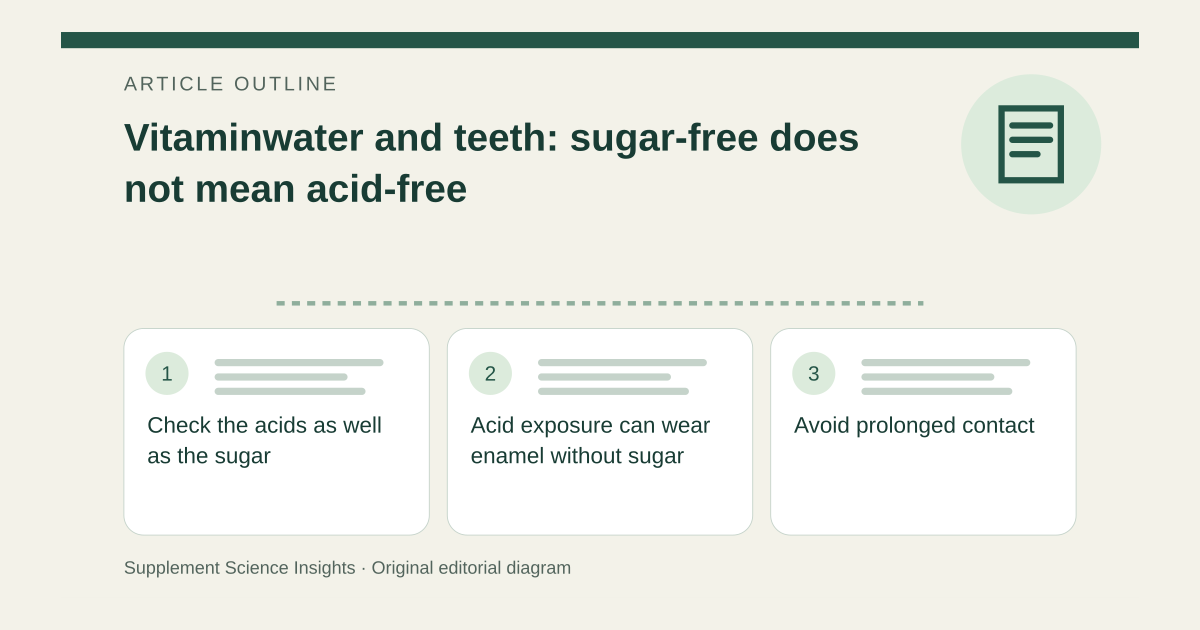
Check the acids as well as the sugar
The inspected US Zero Sugar ingredient lists include citric acid, and some also list phosphoric acid. A zero-sugar statement does not say that a beverage is neutral in pH. No laboratory pH or erosion-rate measurement for these exact bottles is established by this ingredient review. [1]
Acid exposure can wear enamel without sugar
The American Dental Association explains dental erosion as chemical loss of tooth material from acids rather than bacterial decay. Exposure pattern matters, so a beverage should not be judged solely by its calorie or vitamin content. Added nutrients do not cancel the acid exposure. [2]
Avoid prolonged contact
Imagine sipping a flavored acidic drink throughout the day and swishing each mouthful. Reduce that repeated contact, rinse with plain water after acidic drinks, and use fluoride toothpaste as part of usual oral care. ADA advises rinsing rather than brushing immediately after an acidic beverage. [2]
| Label detail | Interpretation |
|---|---|
| Zero sugar | Not a pH measurement |
| Citric acid ingredient | Reason to consider acid exposure |
| Frequent sipping or swishing | Lengthens contact with teeth |
Sources for this article
- vitaminwater® zero sugar flavors, ingredients, & nutrition facts | Coca-Cola US
Source consulted: 2026-09-20. This is a reference resource, not a claim that we conducted the studies or tested a product. - Dental Erosion | American Dental Association
Source consulted: 2026-09-20. This is a reference resource, not a claim that we conducted the studies or tested a product.