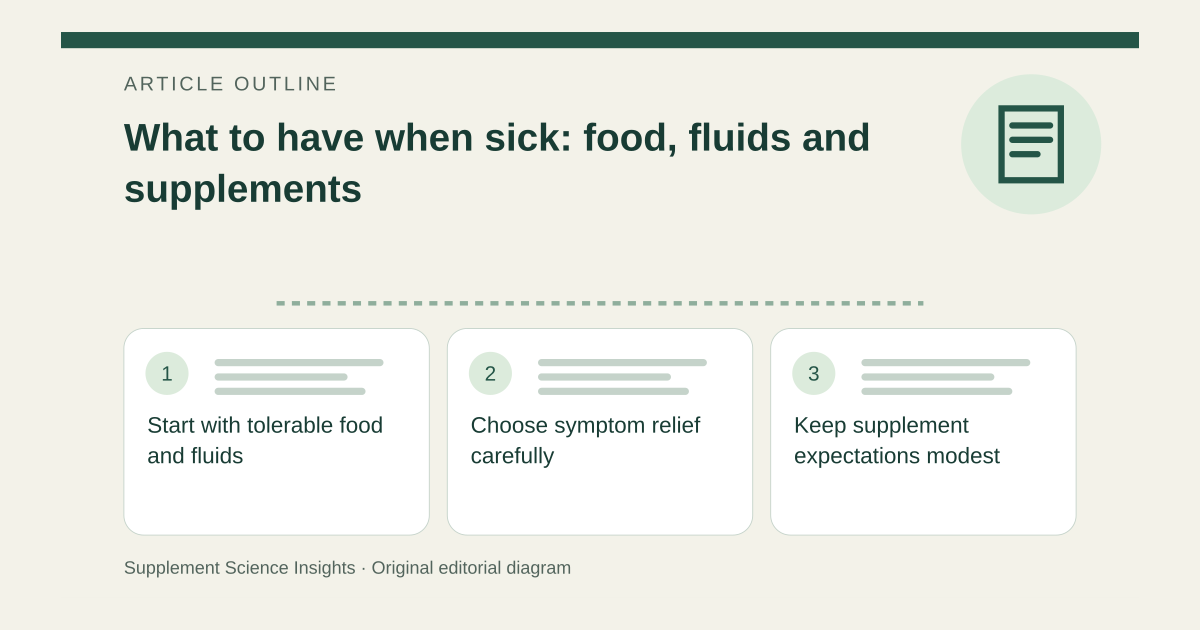
Start with tolerable food and fluids
NHS cold guidance recommends rest, enough fluid to avoid dehydration and healthy food. Small frequent meals and regular small sips may be easier when nausea is present. Follow any prescribed fluid restriction rather than forcing a standard large volume. [1][2]
Choose symptom relief carefully
A pharmacist can advise on medicines for fever, aches or a blocked nose. Combination cold products may already contain a pain reliever, so adding another can duplicate ingredients. Age, pregnancy and other medicines affect which products are suitable. [1]
Keep supplement expectations modest
NHS guidance finds little evidence that vitamin C, echinacea or garlic products prevent colds or reliably speed recovery. A supplement is not a substitute for eating adequately or treating a diagnosed illness. A marketing claim about immunity does not identify the cause of being sick. [1][3]
Recognize when home care is insufficient
Imagine someone with a chronic lung condition develops rapidly worsening flu-like symptoms. Contact a clinician promptly: some people benefit from early antiviral treatment. Severe breathing difficulty or chest pain warrants urgent assessment, rather than another supplement or a wait for food to work. [4][1]
| Situation | Practical response |
|---|---|
| Mild cold | Rest, fluids and tolerable food |
| Combination remedy | Check duplicate ingredients |
| High-risk flu symptoms | Prompt clinical contact |
| Worsening breathing | Urgent assessment |
Sources for this article
- Common cold - NHS
Source consulted: 2026-09-21. This is a reference resource, not a claim that we conducted the studies or tested a product. - Feeling sick (nausea) - NHS
Source consulted: 2026-09-21. This is a reference resource, not a claim that we conducted the studies or tested a product. - Dietary Supplements: What You Need to Know - Consumer
Source consulted: 2026-09-21. This is a reference resource, not a claim that we conducted the studies or tested a product.