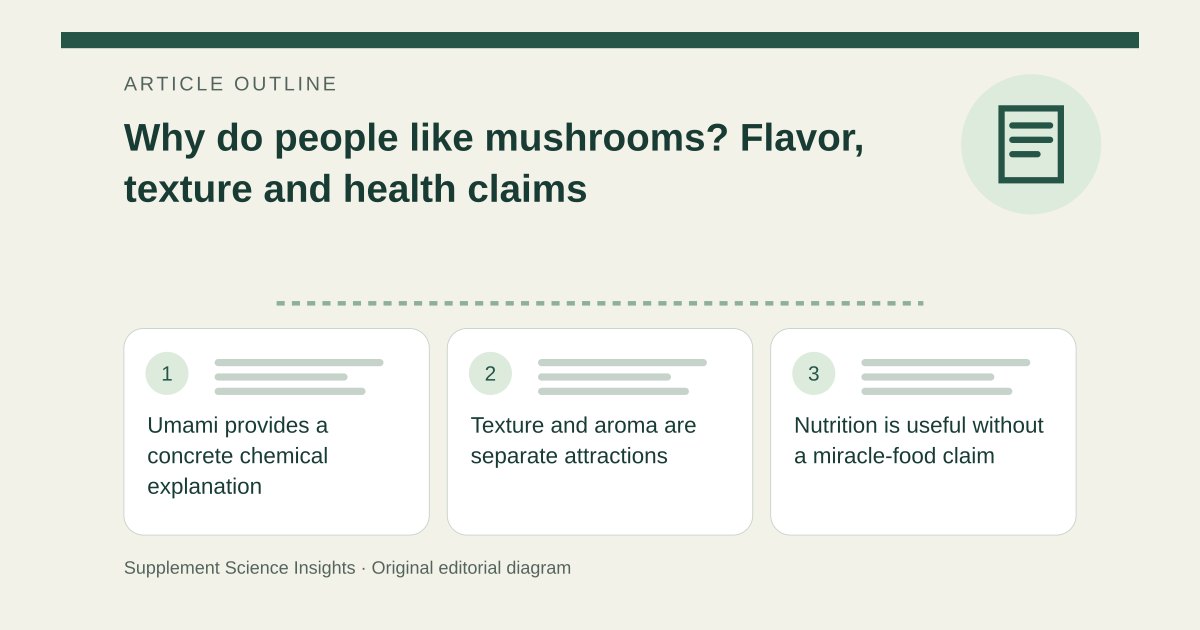
Umami provides a concrete chemical explanation
Mushrooms contain glutamate and, in some forms, nucleotides such as guanylate that contribute to savory taste. The Umami Information Center describes substantial differences among fresh and dried mushrooms. These compounds help explain why mushrooms work in broths and savory dishes. [1]
Texture and aroma are separate attractions
Cremini have a firm, savory character, while king trumpet stems provide a substantial bite. Cooking, slicing and moisture loss alter texture. The appeal of a mushroom burger or broth need not depend on any medicinal effect. [2][3]
Nutrition is useful without a miracle-food claim
Mushrooms can contribute nutrients and dietary variety with relatively little fat before preparation. Research on isolated compounds or supplements does not establish that a preferred culinary variety improves memory or prevents disease. [4][5]
Change the preparation to test a preference
Imagine someone dislikes soft mushroom slices but enjoys a browned, finely chopped filling. That difference may reflect texture and flavor concentration rather than a change in health value. Keep the recipe balanced instead of choosing only by a superfood label. [1][4]
| Feature | Example |
|---|---|
| Umami | Savory broth |
| Texture | Firm king trumpet slices |
| Aroma | Earthy or nutty notes |
| Health marketing | Not needed to justify enjoyment |
Sources for this article
- Mushrooms | Umami Information Center
Source consulted: 2026-09-21. This is a reference resource, not a claim that we conducted the studies or tested a product. - Crimini Mushrooms | Mushroom Varieties 101
Source consulted: 2026-09-21. This is a reference resource, not a claim that we conducted the studies or tested a product. - King Trumpet Mushrooms | Mushroom Varieties 101
Source consulted: 2026-09-21. This is a reference resource, not a claim that we conducted the studies or tested a product. - Fruit and Vegetable Guide Series: Mushrooms | USU
Source consulted: 2026-09-21. This is a reference resource, not a claim that we conducted the studies or tested a product. - Mushroom marvels: understanding their role in human health - PMC
Source consulted: 2026-09-21. This is a reference resource, not a claim that we conducted the studies or tested a product.