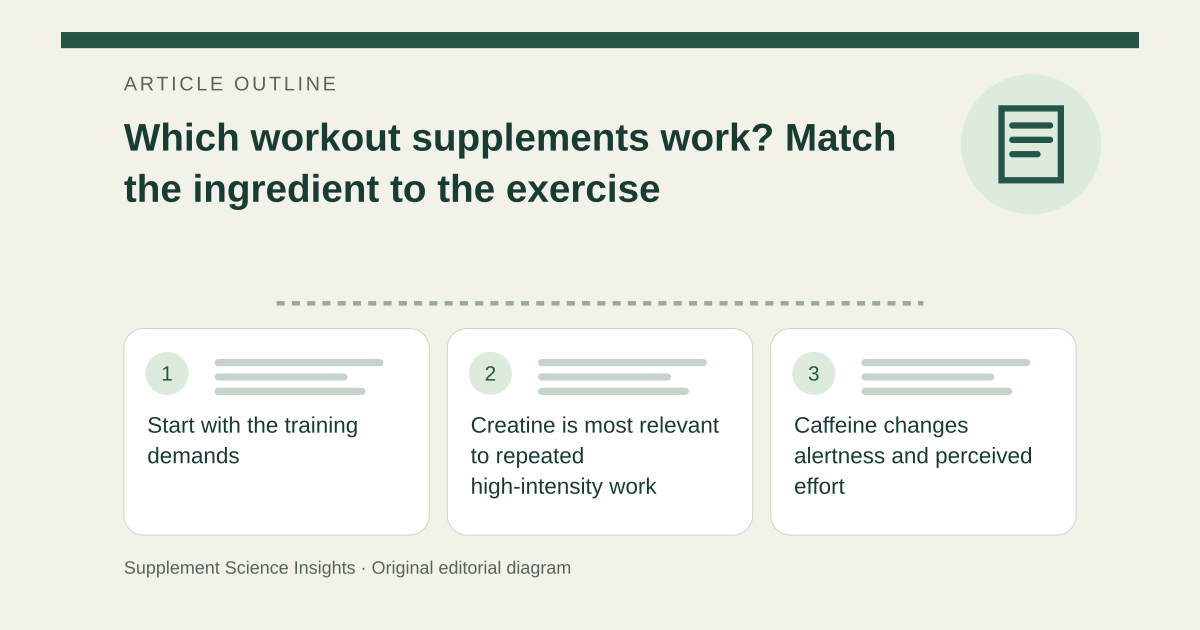
Start with the training demands
ODS places adequate energy, carbohydrate, protein, fluids and micronutrients at the foundation of sports nutrition. A supplement should address an identifiable gap or a supported performance goal. A product used by an athlete does not establish that every recreational exerciser needs it. [1]
Creatine is most relevant to repeated high-intensity work
Creatine supports rapid energy regeneration and can help certain strength, power and repeated-effort tasks. That evidence does not imply equal benefit for every endurance event or replace structured training. Early scale gain can include water rather than new muscle tissue. [1]
Caffeine changes alertness and perceived effort
Caffeine may improve some endurance and intermittent-exercise performance. It can also impair sleep or cause unwanted stimulation. Count coffee, energy drinks and pre-workout together and consider sensitivity; a stronger sensation is not a reliable measure of performance benefit. [1][2]
Protein powder is a convenient food component
Adequate protein supports repair and adaptation, but powder is useful mainly when it helps meet the dietary plan. If food already supplies the need, adding a shake solely because training occurred is not automatically necessary. A protein source and a stimulant blend are different products. [1]
Other ingredients and mixtures need their own evidence
ODS describes varying and sometimes conflicting evidence for ingredients such as beta-alanine, citrulline and BCAAs. Findings for one component do not prove an entire mixture works. Athletes should also verify appropriate product certification and its banned-substance testing scope. [1]
Training without pre-workout is a valid option
Imagine a person eats adequately, hydrates and follows a progressive program without a pre-workout tub. The absence of that category does not make the plan incomplete. Add an ingredient only when its purpose, evidence and suitability are clear. [1][3]
| Goal | Relevant question |
|---|---|
| Repeated high-intensity training | Would creatine suit this task and person? |
| Dietary protein gap | Could food or a simple powder fill it? |
| Feeling tired before training | Are sleep, fuel and recovery adequate? |
Sources for this article
- Dietary Supplements for Exercise and Athletic Performance - Health Professional Fact Sheet
Source consulted: 2026-09-21. This is a reference resource, not a claim that we conducted the studies or tested a product. - Spilling the Beans: How Much Caffeine is Too Much? | FDA
Source consulted: 2026-09-21. This is a reference resource, not a claim that we conducted the studies or tested a product. - Dietary Supplements: What You Need to Know
Source consulted: 2026-09-21. This is a reference resource, not a claim that we conducted the studies or tested a product.