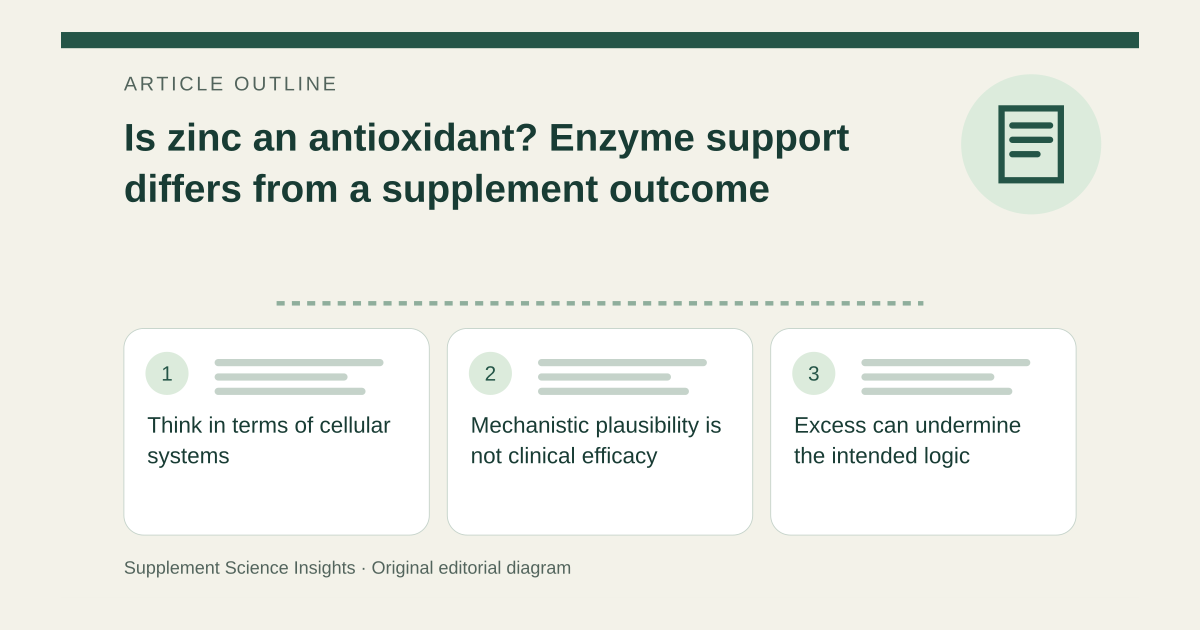
Think in terms of cellular systems
Zinc is required for numerous enzymes and structural proteins. Antioxidant defense involves organized enzymes and other molecules rather than one nutrient acting alone. Copper/zinc superoxide dismutase is an example of a multicomponent enzyme system, not proof that a large zinc dose acts like a universal antioxidant treatment. [1][2]
Mechanistic plausibility is not clinical efficacy
An effect on an oxidative-stress marker would need interpretation alongside study design, population and meaningful health outcomes. The label antioxidant cannot establish that a product prevents disease or compensates for unrelated risks. Nutritional adequacy and extra supplementation are different claims. [1]
Excess can undermine the intended logic
Imagine someone takes more zinc to strengthen antioxidant defenses. Sustained high intake can impair copper absorption, while copper also contributes to relevant enzyme systems. That illustrates why more of one ingredient is not automatically better. Review the dietary need and evidence instead of using the antioxidant label as a dosing rule. [1][2]
| Example | Interpretation |
|---|---|
| Enzyme role | A biological function |
| Biomarker change | Not automatically a clinical benefit |
| Excess zinc | Can disrupt copper status |
Sources for this article
- Zinc - Health Professional Fact Sheet
Source consulted: 2026-09-20. This is a reference resource, not a claim that we conducted the studies or tested a product. - Copper - Health Professional Fact Sheet
Source consulted: 2026-09-20. This is a reference resource, not a claim that we conducted the studies or tested a product.