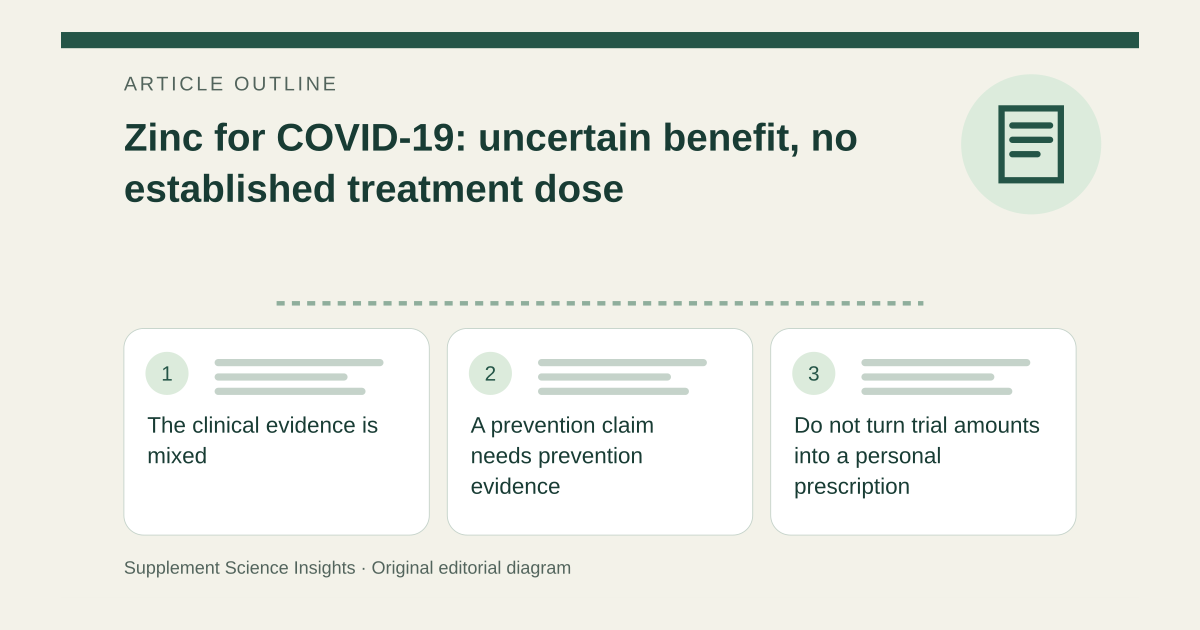
The clinical evidence is mixed
The ODS COVID summary describes an outpatient trial without shorter symptoms and another trial with more favorable recovery or admission outcomes. This does not justify a universal benefit claim. The summary is a synthesis of research, not proof that one regimen works for every variant, patient or care setting. [1]
A prevention claim needs prevention evidence
ODS cites earlier NIH guidance against zinc above nutritional requirements for COVID prevention outside research. That cited guidance should not be mistaken for a newly issued September2026 recommendation, but the inspected evidence still does not establish high-dose prevention. Cold-lozenge findings concern a different infection. [1][2]
Do not turn trial amounts into a personal prescription
No universal COVID zinc dose is established here. NIH gives an adult upper limit of 40 mg daily from total intake for healthy people, not a COVID-treatment target. Medically supervised use is a different situation from copying a trial dose independently. [2]
Account for adverse effects and interactions
High zinc intake can cause stomach symptoms, and prolonged excess can impair copper status and immune function. Certain antibiotics and penicillamine have important absorption interactions. Give the treating team the complete supplement list when reviewing COVID medicines. [2][3]
Do not miss the early-treatment window
Imagine a higher-risk person spends several days trying zinc before asking about treatment. CDC emphasizes prompt contact because eligible antiviral options have short starting windows. Supplement uncertainty should not delay that assessment. [3]
| Issue | Practical distinction |
|---|---|
| Research dose | Not an individual prescription |
| Upper intake limit | Not a treatment target |
| Cold evidence | Not COVID evidence |
| High-risk illness | Seek timely treatment review |
Sources for this article
- Dietary Supplements in the Time of COVID-19 - NIH ODS
Source consulted: 2026-09-21. This is a reference resource, not a claim that we conducted the studies or tested a product. - Zinc - Health Professional Fact Sheet
Source consulted: 2026-09-21. This is a reference resource, not a claim that we conducted the studies or tested a product. - Types of COVID-19 Treatment | Covid | CDC
Source consulted: 2026-09-21. This is a reference resource, not a claim that we conducted the studies or tested a product.