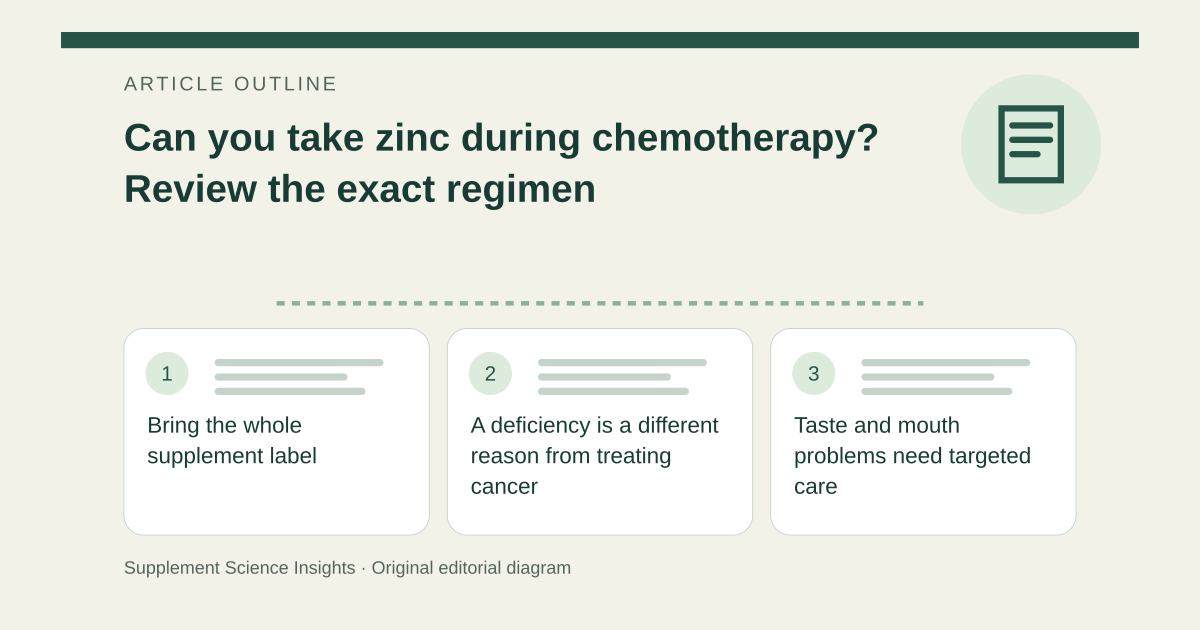
Bring the whole supplement label
NCI advises discussing supplements with the cancer-care team because some can affect treatment. Include the elemental zinc amount, all other ingredients and how often the product is taken. An immune-support blend is not equivalent to a plain zinc preparation. [1]
A deficiency is a different reason from treating cancer
NCI does not establish vitamins or supplements as a way to cure cancer or prevent its return. Correcting a documented nutritional problem can still be part of care. The intended purpose should be explicit so benefit and adverse effects can be monitored. [1][2]
Taste and mouth problems need targeted care
NCI discusses zinc sulfate as potentially helpful for some taste changes after radiation. That conditional observation is not a recommendation for everyone receiving chemotherapy. Mouth pain, infection, dryness and poor intake also require assessment because their management differs. [3]
Do not increase the amount without review
Zinc excess can cause digestive symptoms and longer-term copper problems. During treatment, new symptoms should be discussed with the team rather than assumed to be harmless supplement effects. Ask whether a supplement is indicated, the intended duration and what would prompt reassessment. [2][1]
Make the decision specific
Imagine two patients taking different chemotherapy regimens: one has an identified deficiency and the other buys a high-dose blend for immunity. The same yes-or-no answer would ignore their different reasons and exposures. A pharmacist or dietitian on the oncology team can review the actual products. [1]
| Information | Why it matters |
|---|---|
| Cancer-treatment regimen | Potential compatibility concerns |
| Full label and elemental zinc | Actual exposure |
| Reason for use | Deficiency versus unproven cancer claim |
| Duration and follow-up | Reassessment rather than indefinite use |
Sources for this article
- Diets, Supplements, and Cancer - NCI
Source consulted: 2026-09-21. This is a reference resource, not a claim that we conducted the studies or tested a product. - Zinc - Health Professional Fact Sheet
Source consulted: 2026-09-21. This is a reference resource, not a claim that we conducted the studies or tested a product. - Oral Complications of Cancer Therapies - NCI
Source consulted: 2026-09-21. This is a reference resource, not a claim that we conducted the studies or tested a product.