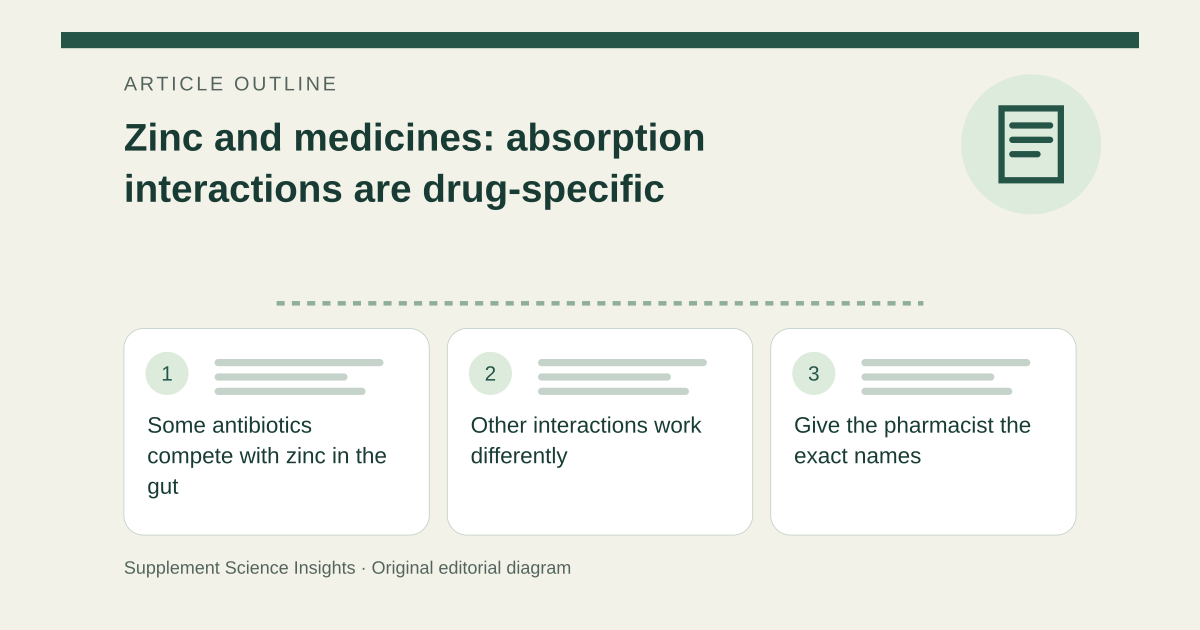
Some antibiotics compete with zinc in the gut
Quinolone and tetracycline antibiotics can interact with zinc in the gastrointestinal tract, reducing absorption of both the mineral and the medicine when taken together. The concern is not merely whether the zinc supplement is absorbed; adequate antibiotic exposure matters too. [1]
ODS gives a general approach of taking these antibiotics at least two hours before or four to six hours after zinc. The exact prescription instructions and pharmacist’s advice take priority for the particular drug and regimen. Do not apply this interval to every antibiotic indiscriminately. [1]
Other interactions work differently
Zinc can reduce the absorption and action of penicillamine. ODS advises separating zinc supplements and penicillamine by at least one hour. Someone using this medicine should have the full regimen reviewed rather than borrowing the antibiotic schedule. [1]
Thiazide diuretics, including hydrochlorothiazide and chlorthalidone, can increase zinc excretion in urine and lower serum zinc. That mechanism is a change in zinc balance, not simply two products competing at the same moment in the intestine. Moving a zinc tablet to bedtime does not by itself resolve the clinical question. [1]
Give the pharmacist the exact names
Imagine someone asks whether zinc is compatible with “an antibiotic” and “a water pill.” Those descriptions omit the drug identities needed to evaluate the relevant interaction. The answer may differ for another antibiotic class or another kind of diuretic.
A useful list contains the exact prescriptions, doses and schedules, plus the zinc amount in every supplement. It lets the pharmacist advise a workable plan rather than guess.
| Question | What it establishes |
|---|---|
| Quinolone or tetracycline | Concurrent gut absorption interaction |
| Penicillamine | A separate interaction and spacing instruction |
| Thiazide diuretic | Increased zinc loss needs clinical context |
Preserve the reason for treatment
Do not skip or stop prescribed medicines to accommodate a supplement. Whether additional zinc is needed is a separate question from whether the products can be scheduled safely together. [1]
The ODS list provides examples, not a complete compatibility check for every medicine. Absence from this short article should not be read as evidence that an unlisted combination has been reviewed and cleared. [1]
Sources for this article
- NIH ODS — Zinc: Health Professional Fact Sheet
Source consulted: 2026-09-17. This is a reference resource, not a claim that we conducted the studies or tested a product.