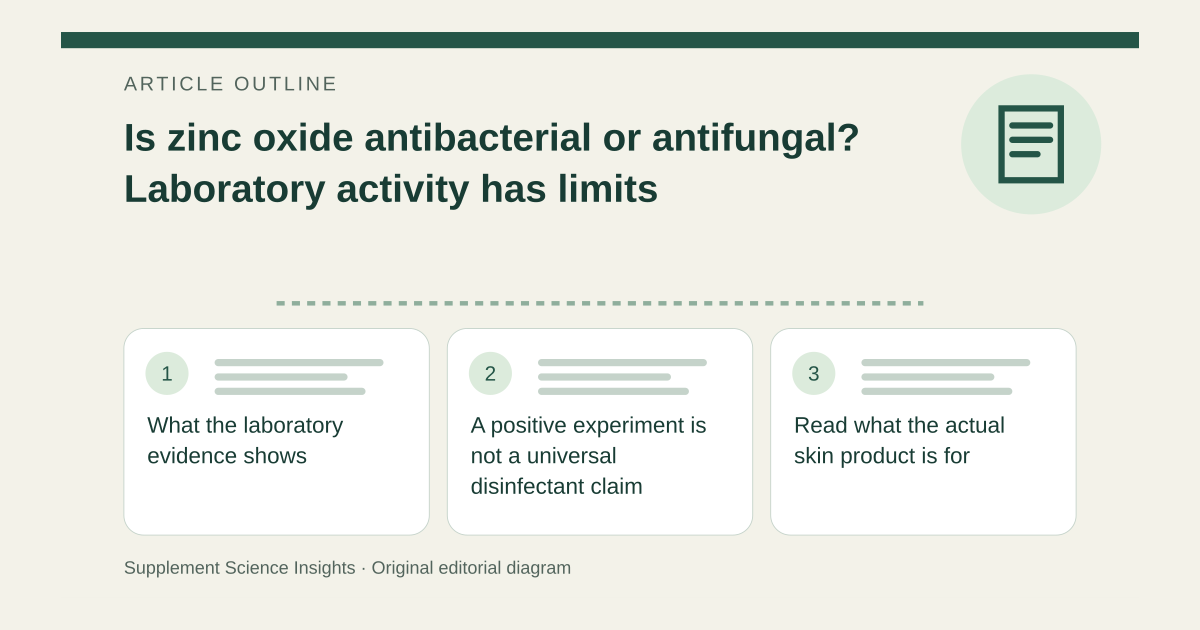
What the laboratory evidence shows
A 2019 review describes antibacterial and antifungal activity of zinc oxide nanoparticles. Proposed mechanisms include reactive oxygen species, zinc-ion release and interactions with microbial membranes. The review identifies particle size and other physical and chemical characteristics as important influences on the effect. [1]
A positive experiment is not a universal disinfectant claim
The review notes inconsistent microbial strains and testing methods. An experimental concentration that inhibits a selected organism does not establish effectiveness against every organism on human skin, a safe oral dose or a clinically useful infection treatment. Human benefit and tissue safety need their own evidence. [1]
Read what the actual skin product is for
The inspected 40% zinc oxide ointment is labeled as a skin protectant for diaper rash and wetness-related irritation. It is not labeled as an antibiotic or antifungal in that source. Barrier protection may help irritated skin without demonstrating eradication of an infection. [2]
Fungal disease requires the right diagnosis
NHS guidance describes antifungal treatment for ringworm, with treatment choice and review depending on location and circumstances. A zinc barrier cream should not be substituted merely because a laboratory paper reports fungal inhibition. Dietary zinc likewise supports normal physiology without acting as a general infection-killing pill. [3][4]
Match the claim to the evidence level
Imagine a cream advertises zinc oxide while a paper tests engineered nanoparticles against a laboratory strain. Matching the ingredient name alone does not match the particle preparation, exposure or outcome. Use the finished-product indication and appropriate clinical care. [1][2]
| Evidence | What it supports |
|---|---|
| Laboratory microbial inhibition | Activity under tested conditions |
| Skin-protectant label | Specified barrier use |
| Dietary zinc requirement | Normal nutrient function |
| Human infection-treatment trial | Clinical outcome for that preparation |
Sources for this article
- Relationship Between Structure And Antimicrobial Activity Of Zinc Oxide Nanoparticles: An Overview - PMC
Source consulted: 2026-09-21. This is a reference resource, not a claim that we conducted the studies or tested a product. - DailyMed - DIAPER RASH- zinc oxide ointment
Source consulted: 2026-09-21. This is a reference resource, not a claim that we conducted the studies or tested a product. - Ringworm - NHS
Source consulted: 2026-09-21. This is a reference resource, not a claim that we conducted the studies or tested a product. - Zinc - Health Professional Fact Sheet
Source consulted: 2026-09-21. This is a reference resource, not a claim that we conducted the studies or tested a product.