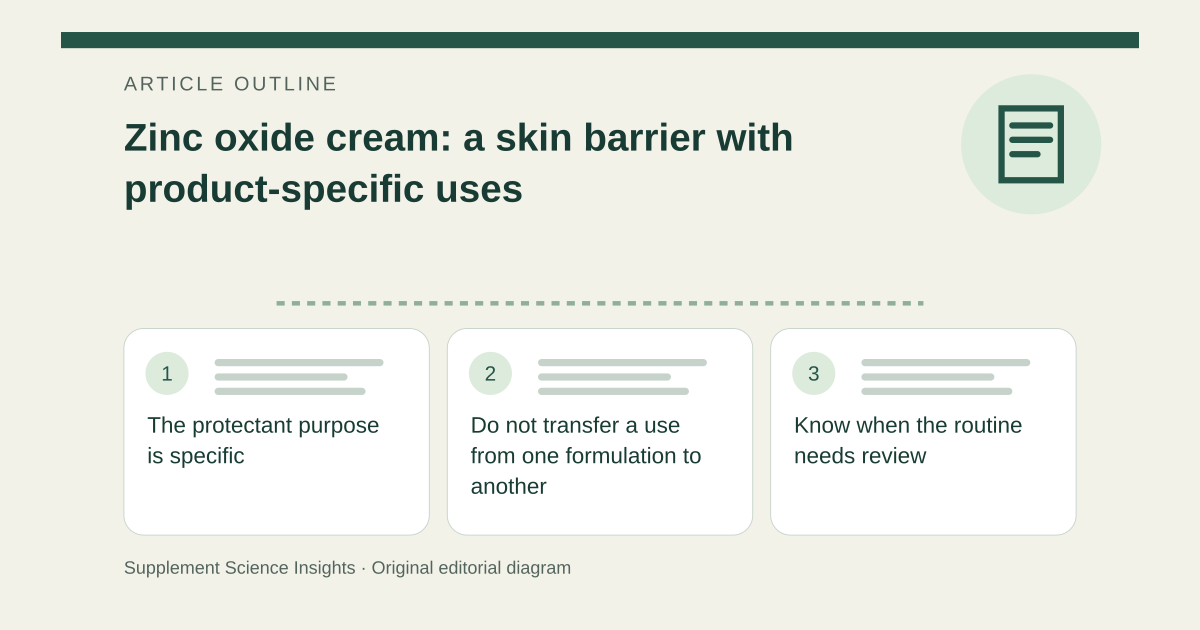
The protectant purpose is specific
The inspected 40% zinc oxide ointment label describes treatment and prevention of diaper rash and protection of chafed skin from wetness. It directs cleaning and drying the area and changing wet or soiled diapers promptly. The ointment complements that care rather than replacing it. [1]
Do not transfer a use from one formulation to another
Zinc oxide also occurs in sunscreens, but protection depends on the tested finished product and its labeled SPF and broad-spectrum status. A diaper ointment’s zinc percentage does not assign it an SPF. Likewise, a protective barrier is not evidence that the product treats every cause of a rash. [1][2]
Know when the routine needs review
The label is for external use and warns against eye contact. It advises medical review if symptoms worsen, last more than seven days or return soon after clearing. Imagine a rash continues despite ordinary diaper care: applying an ever-thicker layer should not replace assessment of its cause. [1]
| Name or claim | What it means |
|---|---|
| Diaper-rash barrier | Protects against wetness as labeled |
| Sunscreen | Requires its own tested labeling |
| Persistent or worsening rash | Needs assessment |
Sources for this article
- DailyMed - DIAPER RASH- zinc oxide ointment
Source consulted: 2026-09-20. This is a reference resource, not a claim that we conducted the studies or tested a product. - Sunscreen: How to Help Protect Your Skin from the Sun | FDA
Source consulted: 2026-09-20. This is a reference resource, not a claim that we conducted the studies or tested a product.