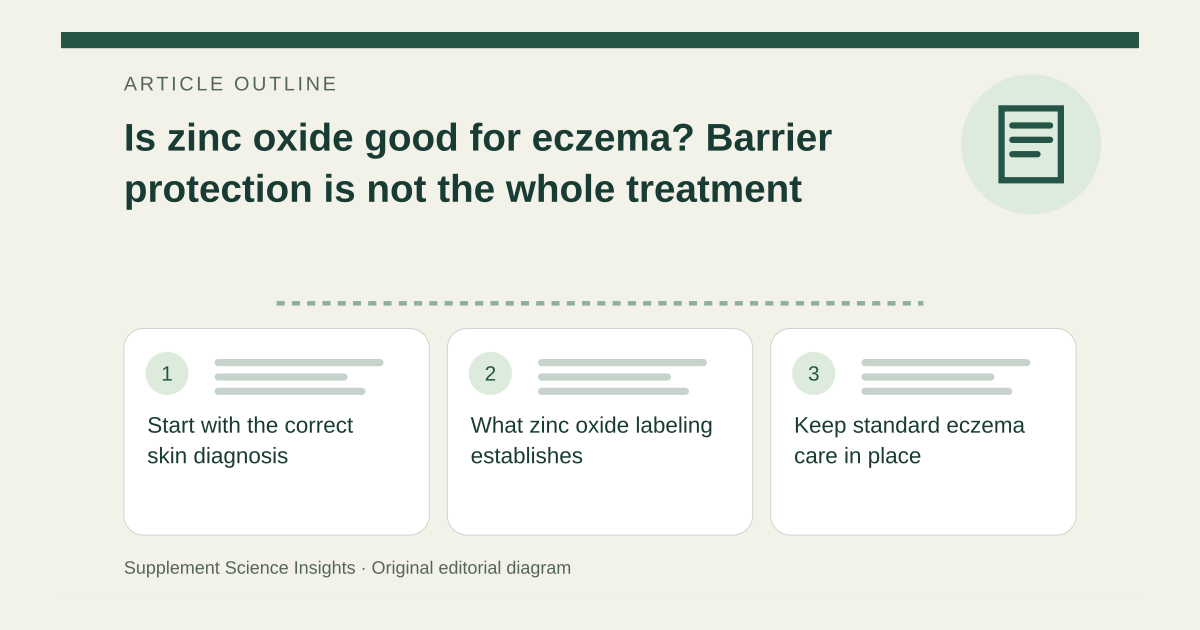
Start with the correct skin diagnosis
Atopic eczema is an itchy, often dry and recurring inflammatory skin condition. Contact dermatitis, fungal infection and other rashes can look different or overlap. A product suitable for diaper irritation is not automatically appropriate for every rash called eczema. [1][2]
What zinc oxide labeling establishes
The inspected zinc oxide ointment is labeled to protect chafed skin and seal out wetness in diaper rash. That supports its particular barrier use. It does not establish that zinc oxide controls atopic eczema inflammation or that all products containing it have the same tolerability. [2]
Keep standard eczema care in place
NHS identifies emollients and topical corticosteroids among the main eczema treatments, with other options depending on severity. Moisturizing remains important between flares. Do not replace a prescribed plan solely because a cream contains a familiar mineral or is described as natural. [1]
Irritation or infection changes the decision
Stop a product that worsens irritation and seek advice. Pain, warmth, swelling, weeping, pus, sudden worsening or feeling unwell can indicate infection or another complication and need prompt assessment. Applying a thicker barrier is not a substitute for checking those signs. [1][2]
Use a targeted question at the pharmacy
Imagine a child has both an eczema history and a new diaper-area rash. Ask which condition the current rash fits and whether a specific barrier product belongs alongside the eczema plan. The answer depends on the skin findings and product rather than zinc oxide concentration alone. [1][2]
| Issue | Relevant response |
|---|---|
| Wetness-related irritation | Check labeled barrier use |
| Atopic eczema dryness | Regular suitable emollient |
| Inflammatory flare | Follow prescribed treatment plan |
| Pain, pus or rapid worsening | Prompt assessment |
Sources for this article
- Atopic eczema - NHS
Source consulted: 2026-09-21. This is a reference resource, not a claim that we conducted the studies or tested a product. - DailyMed - DIAPER RASH- zinc oxide ointment
Source consulted: 2026-09-21. This is a reference resource, not a claim that we conducted the studies or tested a product.