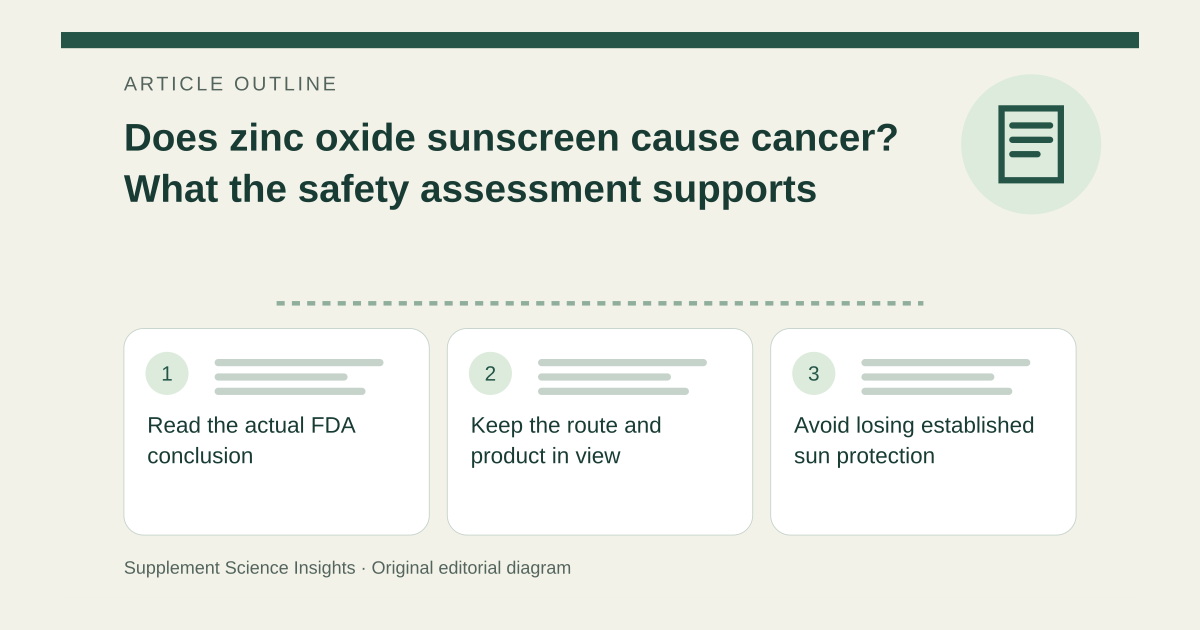
Read the actual FDA conclusion
FDA explains that its evidence review supports a proposed generally recognized as safe and effective classification for zinc oxide and titanium dioxide in sunscreen at specified concentrations. The page distinguishes proposed orders from final actions. This is materially different from a claim that zinc oxide sunscreen is known to cause cancer. [1]
Keep the route and product in view
A formulated cream used on skin is not interchangeable with swallowing a chemical, inhaling loose powder or an experimental cell exposure. The inspected sunscreen assessment should not be broadened into a guarantee about every raw material or route. Use the finished product as directed. [1]
Avoid losing established sun protection
AAD recommends broad-spectrum, water-resistant SPF30 or higher sunscreen together with shade and protective clothing. The active ingredient name alone does not establish how well an individual product protects or whether enough is applied. [2]
Choose a tolerable formulation
AAD identifies mineral sunscreens as useful options for some people whose skin stings with other products. Other ingredients can still affect comfort. If a particular formulation irritates, choose an appropriate alternative rather than assuming all sun protection is unsafe. [3]
Compare a warning with its actual evidence
Imagine a headline discusses nanoparticles in a laboratory test but recommends abandoning all zinc sunscreen. Check the dose, exposure route and measured outcome before making that leap. A sunscreen-specific safety assessment and correct use are more relevant to that everyday decision. [1][2]
| Question | Relevant distinction |
|---|---|
| What was tested? | Raw material or finished sunscreen |
| How was exposure delivered? | Topical versus another route |
| What outcome was measured? | Laboratory effect versus human cancer |
| What protection is maintained? | Broad spectrum, adequate application and shade |
Sources for this article
- Questions and Answers: FDA’s regulatory actions on over-the-counter sunscreen | FDA
Source consulted: 2026-09-21. This is a reference resource, not a claim that we conducted the studies or tested a product. - Sunscreen FAQs
Source consulted: 2026-09-21. This is a reference resource, not a claim that we conducted the studies or tested a product. - How do I know if I'm using the right sunscreen?
Source consulted: 2026-09-21. This is a reference resource, not a claim that we conducted the studies or tested a product.