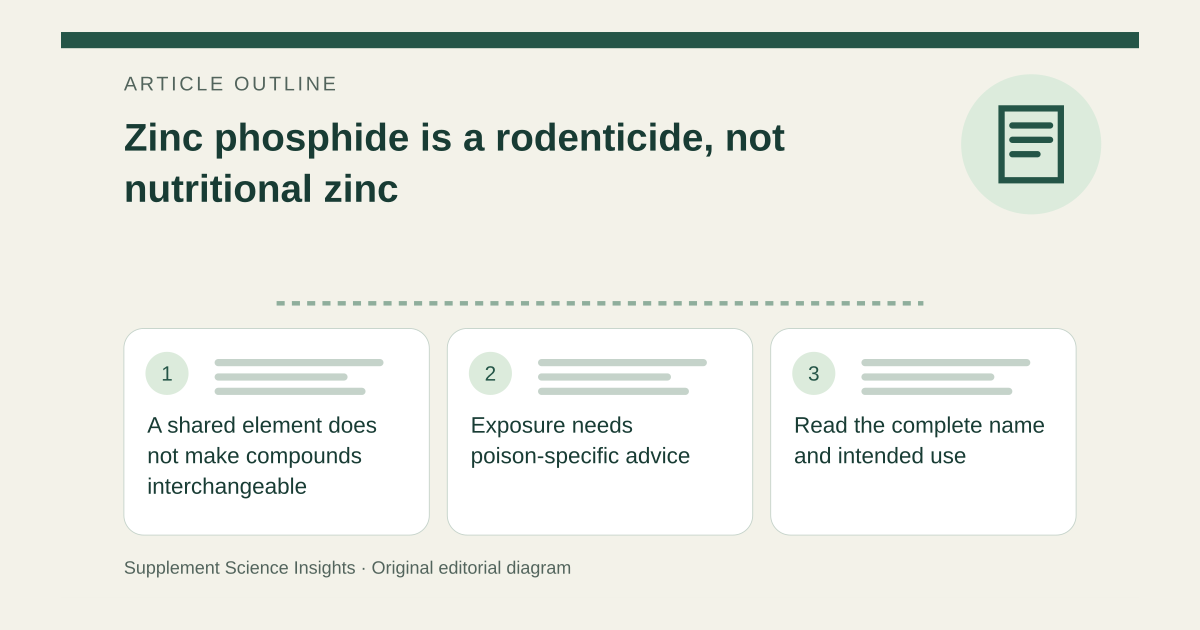
A shared element does not make compounds interchangeable
NPIC identifies zinc phosphide as a compound used in rodenticide baits. Its toxic behavior is entirely different from the intended nutritional use of food or supplement zinc. A chemical name containing zinc is not evidence of food suitability. [1][2]
Exposure needs poison-specific advice
If exposure is suspected, contact Poison Control immediately; in the United States the number is 1-800-222-1222. For trouble breathing, collapse or another severe emergency, call emergency services. Keep the product information available for responders if this can be done safely, and follow professional instructions instead of a home remedy. [1]
Read the complete name and intended use
Imagine a search result mentions zinc phosphide while someone is researching zinc deficiency. The result concerns pest control, not nutrition. Keep pesticides in their original labeled containers and separated from food and supplements; do not infer suitability from the shared mineral name. [1]
| Name or claim | What it means |
|---|---|
| Zinc phosphide | Pesticide and poisoning hazard |
| Dietary zinc | Different compounds and intended exposure |
| Suspected pesticide exposure | Seek poison-control help immediately |
Sources for this article
- Zinc Phosphide Fact Sheet
Source consulted: 2026-09-20. This is a reference resource, not a claim that we conducted the studies or tested a product. - Zinc - Health Professional Fact Sheet
Source consulted: 2026-09-20. This is a reference resource, not a claim that we conducted the studies or tested a product.