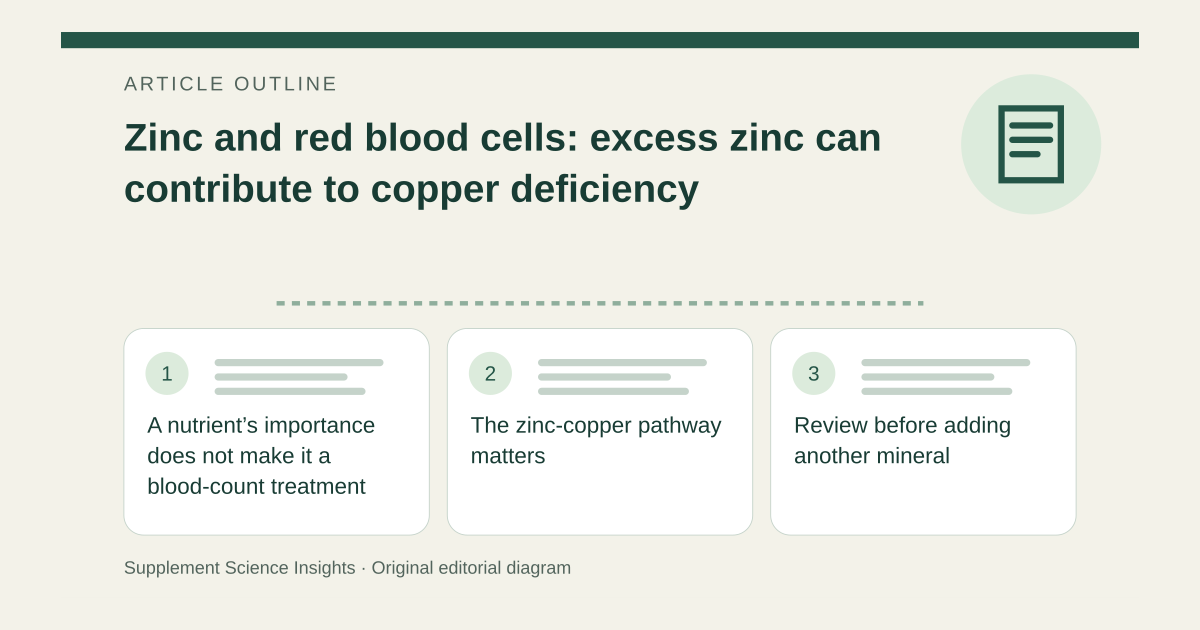
A nutrient’s importance does not make it a blood-count treatment
Red-cell abnormalities require interpretation of the blood count and underlying cause. Iron, B12, folate, copper and nonnutritional conditions can be relevant in different cases. Choosing zinc simply because it supports normal metabolism does not establish that it will correct the specific problem. [1][2][3]
The zinc-copper pathway matters
ODS describes impaired copper absorption with sustained high zinc intake. Its copper reference identifies anemia among consequences of copper deficiency. Together these establish a plausible and recognized pathway, but not that every low hemoglobin result in a zinc user is caused by zinc. [1][3]
Review before adding another mineral
Imagine anemia is discovered in someone using high-dose zinc for months. Provide the complete intake history to the clinician. Appropriate testing can distinguish causes; increasing zinc or self-prescribing copper and iron without that review risks treating the wrong problem and creating further excess. [1][3]
| Example | Interpretation |
|---|---|
| High zinc over time | Can impair copper absorption |
| Copper deficiency | Can be associated with anemia |
| Low hemoglobin | Does not establish one nutrient cause |
Sources for this article
- Zinc - Health Professional Fact Sheet
Source consulted: 2026-09-20. This is a reference resource, not a claim that we conducted the studies or tested a product. - Iron - Health Professional Fact Sheet
Source consulted: 2026-09-20. This is a reference resource, not a claim that we conducted the studies or tested a product. - Copper - Health Professional Fact Sheet
Source consulted: 2026-09-20. This is a reference resource, not a claim that we conducted the studies or tested a product.