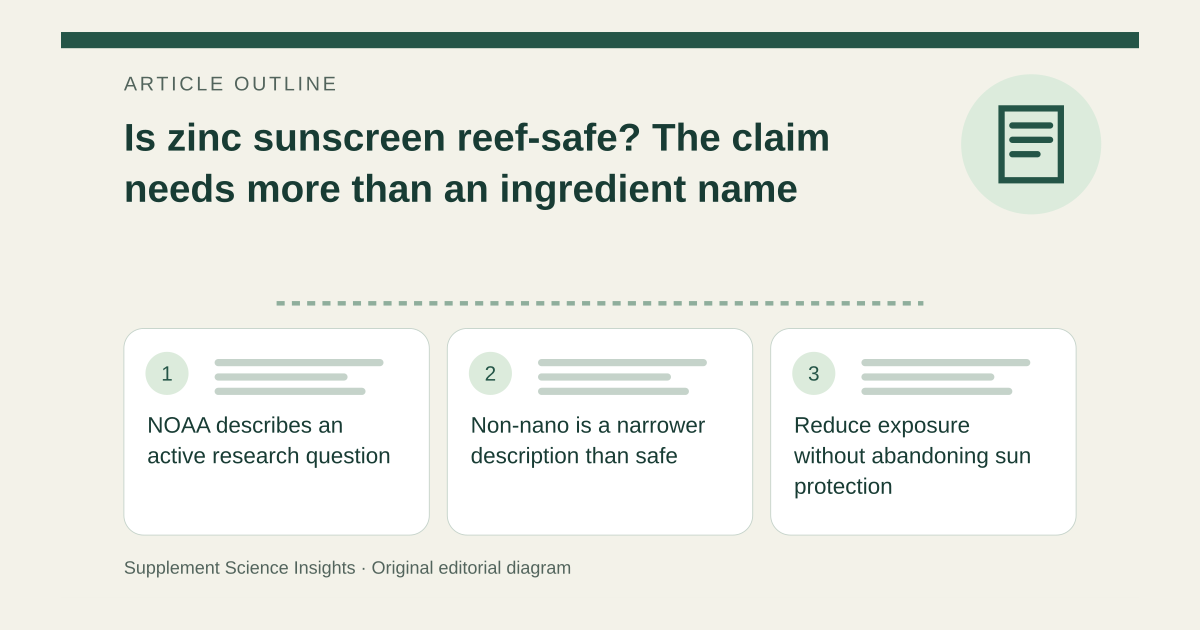
NOAA describes an active research question
NOAA reports that some UV filters can harm aquatic organisms and calls for more comprehensive ecological risk assessment. Its overview considers mineral sunscreen a preferable option with fewer effects, but its list of ingredients of concern includes nano-zinc oxide. These statements do not establish that every zinc formula is harmless to reefs. [1]
Non-nano is a narrower description than safe
A particle-size label describes one property. It does not supply a finished-product environmental assessment or prove zero impact at every concentration. Human sun protection and ecological effects are separate outcomes, so a sunscreen’s SPF cannot answer the reef question. [1][2]
Reduce exposure without abandoning sun protection
Imagine swimming near a reef. UPF clothing and shade can reduce the amount of uncovered skin requiring sunscreen. On exposed skin, use appropriate sun protection and follow the destination’s current guidance. Do not interpret a reef-friendly slogan as proof that unlimited release into water is harmless. [1][2]
| Concern | Useful distinction |
|---|---|
| Zinc oxide | Identifies a UV-filter ingredient |
| Non-nano statement | Not complete ecological testing |
| UPF clothing | Reduces uncovered skin exposure |
Sources for this article
- Skincare Chemicals and Marine Life
Source consulted: 2026-09-20. This is a reference resource, not a claim that we conducted the studies or tested a product. - Sunscreen FAQs
Source consulted: 2026-09-20. This is a reference resource, not a claim that we conducted the studies or tested a product.