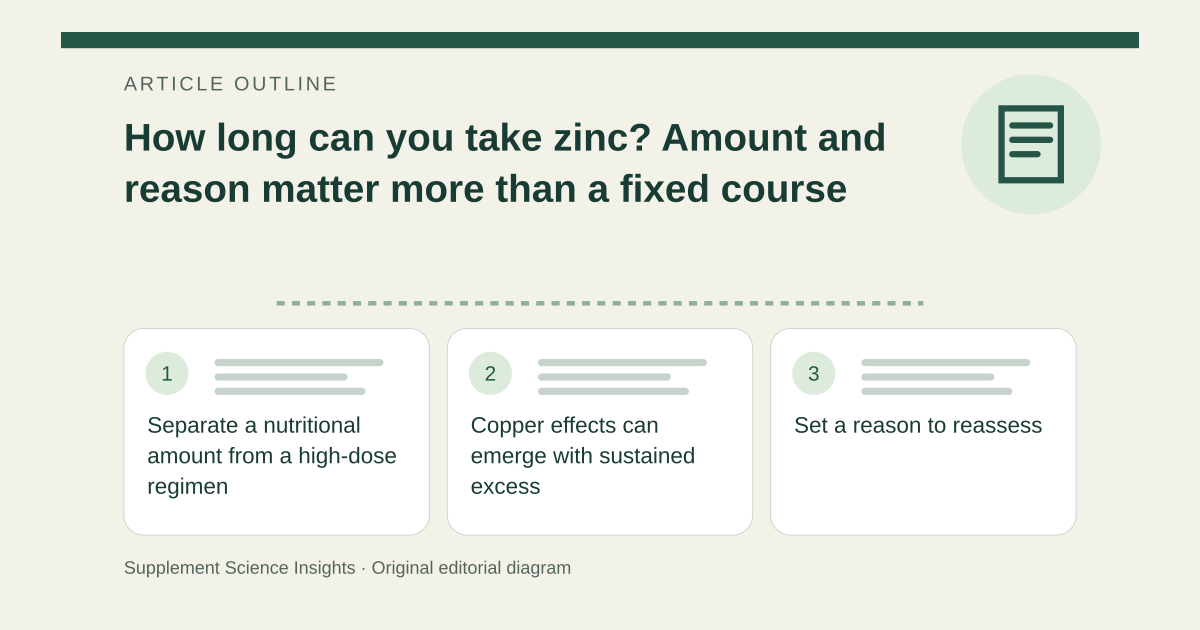
Separate a nutritional amount from a high-dose regimen
The adult upper limit is 40 mg zinc per day from all sources, while clinician-supervised treatment can use a different plan. That limit is not a recommended dose or a guarantee that every smaller amount is appropriate indefinitely. A short condition-specific study does not establish lifelong use of the same amount. [1]
Copper effects can emerge with sustained excess
ODS notes that zinc amounts of 50 mg or more taken for weeks can inhibit copper absorption and have other adverse effects. This is a warning about the exposure, not a rule that all shorter use is harmless or that harm begins at one exact day. Count lozenges and other products too. [1]
Set a reason to reassess
Imagine a high-dose product remains in a daily routine after the original concern resolved. Review whether the indication persists and whether symptoms or laboratory findings warrant evaluation. Do not automatically add copper to offset unnecessary zinc; the first question is whether the zinc plan itself is justified. [1][2]
| Example | Interpretation |
|---|---|
| Daily routine continued by habit | Reassess the original purpose |
| High amount for weeks | Copper status can be affected |
| Added copper | Not a substitute for reviewing zinc |
Sources for this article
- Zinc - Health Professional Fact Sheet
Source consulted: 2026-09-20. This is a reference resource, not a claim that we conducted the studies or tested a product. - Copper - Health Professional Fact Sheet
Source consulted: 2026-09-20. This is a reference resource, not a claim that we conducted the studies or tested a product.