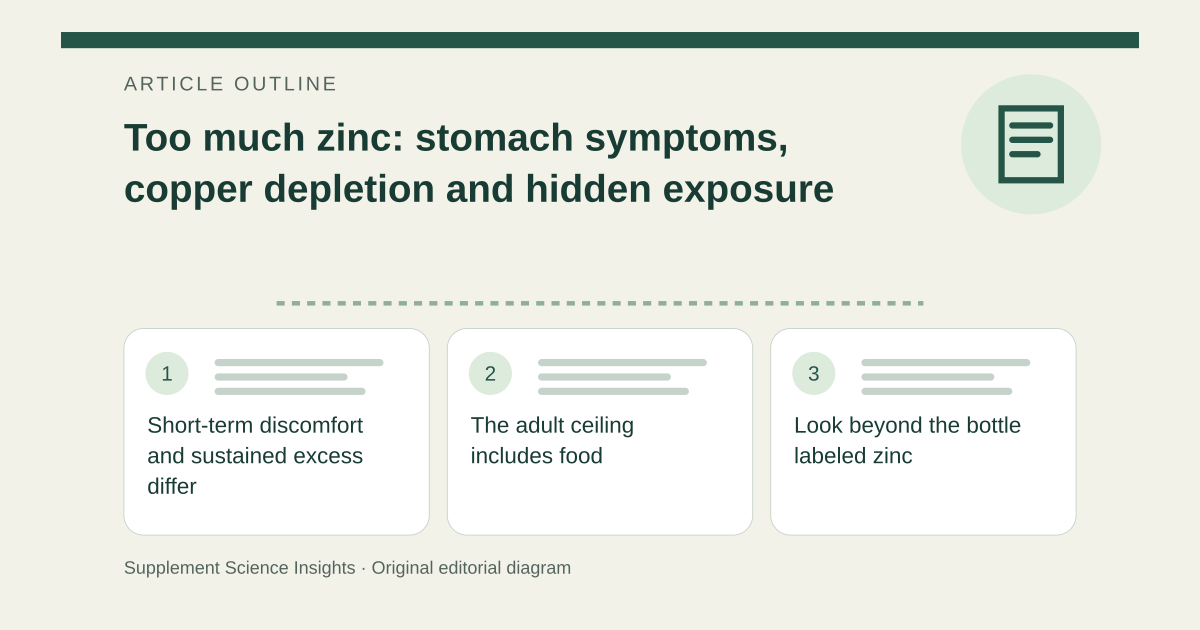
Short-term discomfort and sustained excess differ
High zinc intake can cause nausea, vomiting, stomach distress, dizziness, headaches and loss of appetite. These symptoms do not measure the amount absorbed and are not evidence that a product is working. [1]
ODS reports that amounts of 50 mg or more taken over weeks can interfere with copper absorption, reduce immune function and lower HDL cholesterol. That description is not a sharp boundary below which every person is safe or above which harm is inevitable; amount and duration both matter. [1]
The adult ceiling includes food
The adult tolerable upper intake level is 40 mg zinc per day from food and supplements. Children and adolescents have lower limits. Unlike the adult magnesium limit, this zinc limit is not restricted to supplements and medicines. [1]
A medically supervised zinc treatment may use a different regimen. The general upper limit should not be used to change such treatment without the clinician, nor treated as a daily goal for someone buying supplements independently. [1]
Look beyond the bottle labeled zinc
Multivitamins and cold preparations can add to a separate zinc supplement. Excessive use of zinc-containing denture adhesive has also caused copper deficiency and neurological harm in reported cases. Products vary, so check the actual ingredients rather than assuming every adhesive contains zinc. [1]
ODS distinguishes excessive adhesive use from use as directed. The existence of case reports does not mean ordinary use of every dental product is toxic, but a history limited to swallowed tablets can miss an important exposure. [1]
An incomplete list can hide the problem
Imagine a person records a daily zinc supplement but omits frequent cold lozenges because they consider them medicine. The total exposure and its duration remain unclear until both are included.
A complete inventory can identify a concern; it cannot diagnose copper depletion or explain neurological symptoms without clinical assessment.
| Question | What it establishes |
|---|---|
| Amount per serving | Use elemental zinc |
| All products and actual servings | Include intermittent preparations |
| Duration of use | A single occasion differs from weeks of exposure |
Do not try to balance an excess with another supplement
Persistent symptoms or suspected excessive intake warrant professional advice. Bring the packages and actual use history. A blood result and the clinical situation may be needed to distinguish exposure from established harm. [1]
Adding copper on your own does not establish that ongoing excess zinc is safe. The underlying source, amount and treatment purpose need review. [1]
Sources for this article
- NIH ODS — Zinc: Health Professional Fact Sheet
Source consulted: 2026-09-17. This is a reference resource, not a claim that we conducted the studies or tested a product.