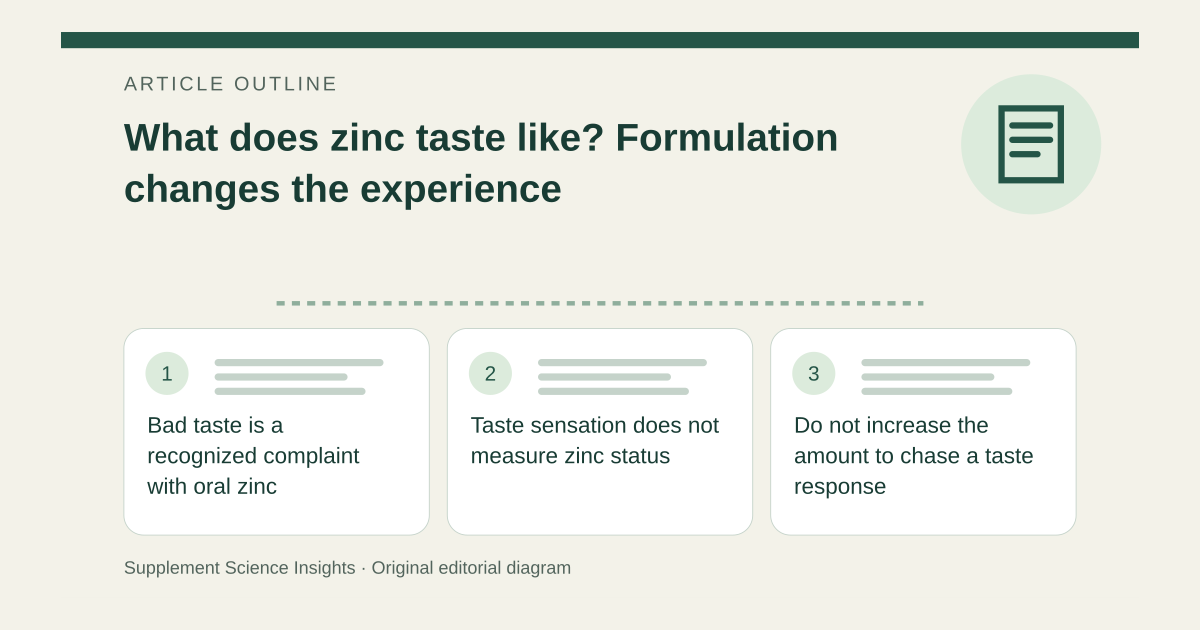
Bad taste is a recognized complaint with oral zinc
NCCIH’s clinical summary notes bad taste and throat irritation among reported problems with oral zinc products studied for colds. That supports the possibility of an unpleasant experience, not a single universal flavor shared by all salts, capsules and lozenges. [1]
Taste sensation does not measure zinc status
ODS describes zinc’s role in taste, but nutritional status cannot be established by judging whether a sample tastes bitter, metallic or mild. A flavored lozenge also includes other ingredients. Use the label to identify the amount and seek appropriate evaluation if deficiency is suspected. [2]
Do not increase the amount to chase a taste response
Imagine one product tastes stronger than another. That does not show a higher absorbed dose or better effectiveness. Excess zinc can cause nausea and copper deficiency; a persistent metallic taste outside dosing also warrants consideration of oral health, medicines and other causes. [2][3]
| Observation | Appropriate distinction |
|---|---|
| Stronger taste | Not an absorption measurement |
| Flavoring and dosage form | Change the sensory experience |
| Persistent taste change | Review causes beyond zinc |
Sources for this article
- The Common Cold and Complementary Health Approaches: What the Science Says | NCCIH
Source consulted: 2026-09-20. This is a reference resource, not a claim that we conducted the studies or tested a product. - Zinc - Health Professional Fact Sheet
Source consulted: 2026-09-20. This is a reference resource, not a claim that we conducted the studies or tested a product. - Metallic taste - NHS
Source consulted: 2026-09-20. This is a reference resource, not a claim that we conducted the studies or tested a product.