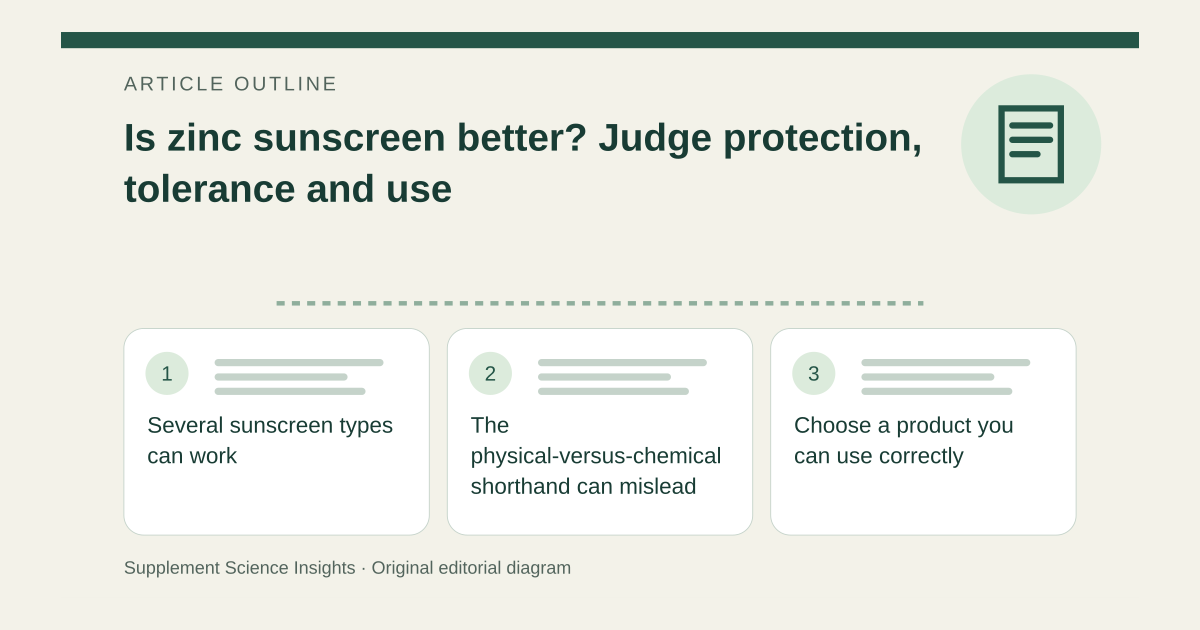
Several sunscreen types can work
AAD says mineral, chemical and hybrid sunscreens can effectively protect when they are broad-spectrum, water-resistant and SPF 30 or higher. The active ingredient category alone does not establish the protection of the finished product or how evenly someone applies it. [1]
The physical-versus-chemical shorthand can mislead
AAD explains that all these sunscreens absorb UV, while physical sunscreens also reflect it. Zinc oxide is not simply a mirror that avoids interaction with light. Mineral products may suit sensitive skin, but texture, visible residue and personal tolerance also affect consistent use. [1]
Choose a product you can use correctly
Imagine a person applies too little of a disliked zinc formula but would use enough of another broad-spectrum sunscreen. The zinc name cannot compensate for inadequate coverage. Compare the actual protection label and tolerability, then apply and reapply as directed. [1]
| Concern | Useful distinction |
|---|---|
| Zinc oxide | One useful filter option |
| Broad-spectrum and SPF | Finished-product protection claims |
| Consistent adequate application | Necessary for any formulation |
Sources for this article
- Sunscreen FAQs
Source consulted: 2026-09-20. This is a reference resource, not a claim that we conducted the studies or tested a product.