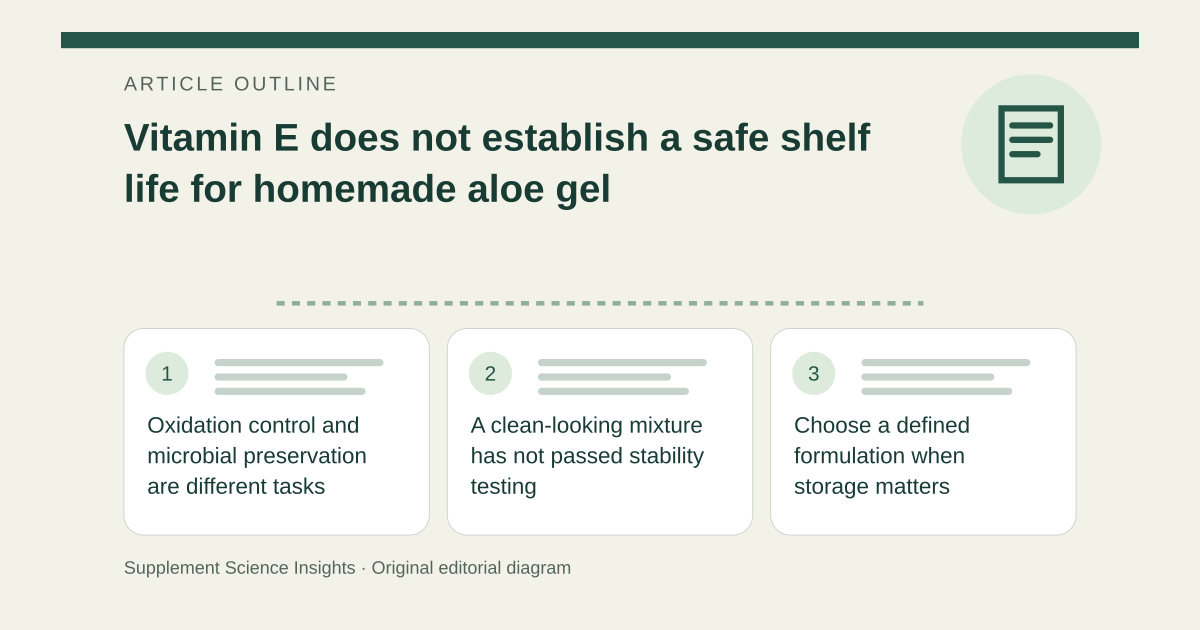
Oxidation control and microbial preservation are different tasks
Vitamin E is known for antioxidant activity. That description is not evidence that a few drops reliably control bacteria or fungi in a water-containing gel. FDA identifies ineffective preservation, contaminated water or raw materials, and poor packaging as routes to harmful microbial contamination. [1][2]
A clean-looking mixture has not passed stability testing
Preparing a gel at home does not establish its initial microbial content or how well it resists contamination during use. Repeated finger contact, heat and moisture can affect product safety. Refrigeration or a vitamin E addition should not be used to invent a guaranteed number of weeks or months for storage. [2][3]
Choose a defined formulation when storage matters
Imagine a jar contains fresh aloe gel, water and an opened supplement capsule. None of those steps documents an effective preservative system. For a product intended for repeated storage and use, choose a preparation with manufacturer instructions rather than treating the homemade mixture as equivalent. Do not apply a questionable mixture to damaged skin or the eye area. [2][3]
| Situation | What it means |
|---|---|
| Antioxidant ingredient | Not proof of microbial preservation |
| Homemade gel | No validated expiry established |
| Repeated storage | Requires a suitable complete formulation |
Sources for this article
- Vitamin E - Health Professional Fact Sheet
Source consulted: 2026-09-20. This is a reference resource, not a claim that we conducted the studies or tested a product. - Microbiological Safety and Cosmetics | FDA
Source consulted: 2026-09-20. This is a reference resource, not a claim that we conducted the studies or tested a product. - Shelf Life and Expiration Dating of Cosmetics | FDA
Source consulted: 2026-09-20. This is a reference resource, not a claim that we conducted the studies or tested a product.