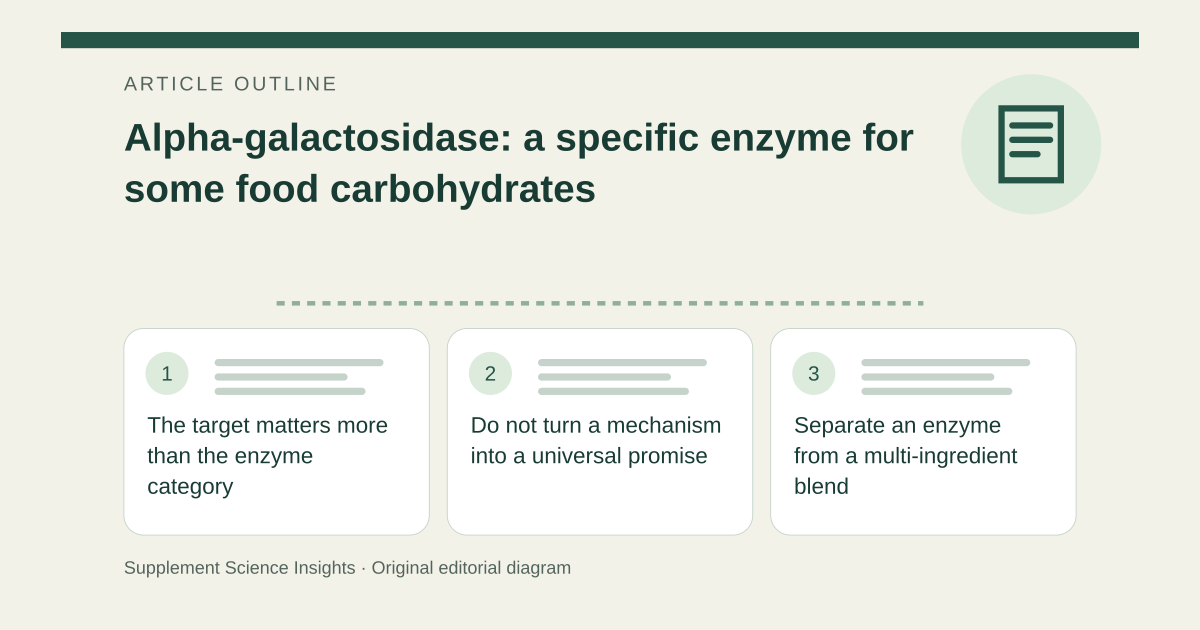
The target matters more than the enzyme category
Alpha-galactosidase is an enzyme used to break down certain carbohydrates, including galactooligosaccharides found in foods such as beans. Johns Hopkins describes its use in some nonprescription digestive-enzyme products. Its target differs from lactase, which breaks down lactose. [1]
The practical question is therefore not whether enzymes are generally good for digestion. It is whether the specific enzyme addresses a relevant component of the food being eaten. [1]
Do not turn a mechanism into a universal promise
An ability to break down a carbohydrate does not establish relief from every source of gas or abdominal symptoms. Swallowed air, dietary factors and digestive conditions can all contribute to gas. NIDDK recommends treatment based on the underlying cause. [2][1]
A product containing alpha-galactosidase should not be treated as a substitute for evaluation of persistent symptoms. A person whose symptoms are unrelated to its carbohydrate target may be asking the product to solve a different problem. [2][1]
Separate an enzyme from a multi-ingredient blend
A label can list alpha-galactosidase alongside several other enzymes. The total weight of that mixture does not reveal the activity or amount of each component. Nor does the number of enzymes on the front of the package establish that a formula is better suited to a particular meal.
For a useful comparison, note the exact enzyme named, the declared activity information and the manufacturer's directions. If important details are absent, keep them marked as unknown. Do not invent an equal split across ingredients or compare a blend weight with a single-enzyme quantity.
Symptoms deserve a cause-based approach
The Johns Hopkins overview notes uncertainty about the composition and side effects of nonprescription enzyme products. NIDDK advises discussing gas symptoms that are bothersome or occur with other symptoms with a health professional. More enzyme is not an established answer to unexplained abdominal trouble. [1][2]
Check a proposed product with the clinician managing any digestive condition, particularly when symptoms change. This article does not establish compatibility with a particular medicine, pregnancy or pediatric use. [1][2]
Two meals, two different questions
Imagine discomfort follows a bean meal on one occasion and a milk drink on another. Those observations do not prove that the same carbohydrate or mechanism caused both episodes. An enzyme intended for some bean carbohydrates cannot be assumed to address lactose, and lactase cannot be assumed to address the bean meal.
Write down the full meal and symptoms before drawing conclusions from one ingredient. This is a way to organize questions for care, not a self-diagnosis or a product challenge. A useful record also notes portion size; the presence of a food alone does not describe the amount eaten.
| Hypothetical situation | Question to clarify |
|---|---|
| Symptoms after beans | Are relevant fermentable carbohydrates involved? |
| Symptoms after milk | Is lactose involved, or is there another explanation? |
| Persistent symptoms | Does the cause need medical assessment? |
Sources for this article
- Johns Hopkins Medicine — Digestive Enzymes and Digestive Enzyme Supplements
Source consulted: 2026-09-17. This is a reference resource, not a claim that we conducted the studies or tested a product. - NIDDK — Treatment for Gas in the Digestive Tract
Source consulted: 2026-09-17. This is a reference resource, not a claim that we conducted the studies or tested a product.