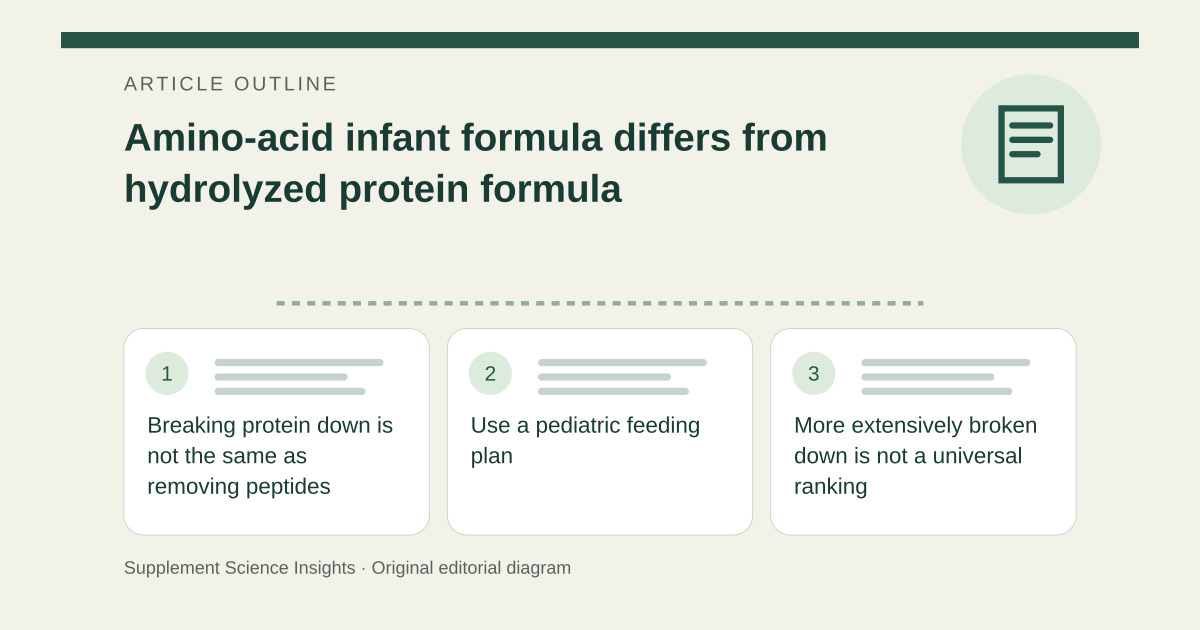
Breaking protein down is not the same as removing peptides
The World Allergy Organization guideline distinguishes amino-acid formulas from extensively hydrolyzed formulas. This distinction matters when selecting nutrition for a child with cow’s milk allergy. [1][2]
Amino-acid formula is not simply a sports amino-acid powder added to a bottle. It is a specialized infant feeding preparation whose overall nutritional composition matters. [1][2]
Use a pediatric feeding plan
The guideline’s recommendations depend on the clinical context and include uncertainty about comparative health outcomes. They do not mean every infant with feeding symptoms needs an amino-acid formula. [1][2]
AAP guidance advises following the pediatrician’s instructions for specialized formulas, including preparation and feeding requirements. Do not replace formula with an adult supplement or improvise a nutritionally incomplete mixture. [1][2]
More extensively broken down is not a universal ranking
Imagine a baby tolerates an appropriate prescribed formula. The availability of a free-amino-acid option does not alone establish a reason to switch.
| Detail | Interpretation |
|---|---|
| Hydrolyzed formula | Contains smaller protein fragments |
| Amino-acid formula | Uses free amino acids |
| Selection | Clinical and nutritional decision |
Sources for this article
- World Allergy Organization (WAO) Diagnosis and Rationale for Action against Cow's Milk Allergy (DRACMA) guideline update – XII – Recommendations on milk formula supplements with and without probiotics for infants and toddlers with CMA - PMC
Source consulted: 2026-09-18. This is a reference resource, not a claim that we conducted the studies or tested a product. - Choosing a Baby Formula - HealthyChildren.org
Source consulted: 2026-09-18. This is a reference resource, not a claim that we conducted the studies or tested a product.