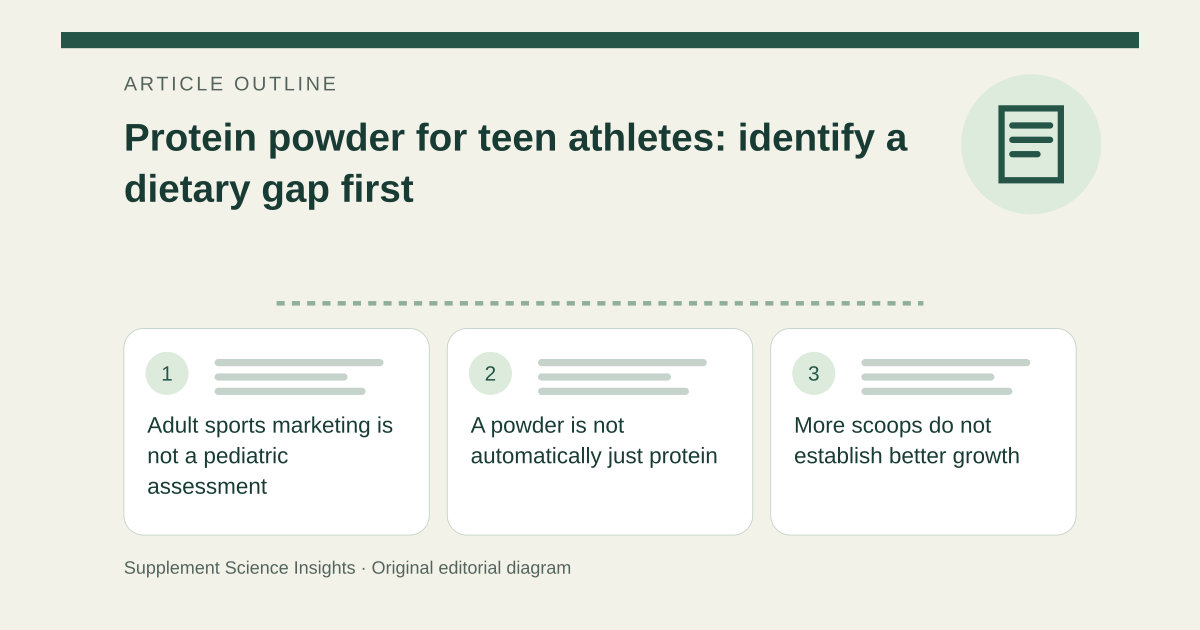
Adult sports marketing is not a pediatric assessment
The American Academy of Pediatrics’ parent resource states that most young athletes with a healthy, balanced diet do not need or benefit from protein supplements. The relevant starting point is whether meals provide adequate nutrition for growth and activity. [1]
A vegetarian diet may benefit from thoughtful planning, but the dietary label alone does not establish a protein deficiency. A registered dietitian can help evaluate actual intake and practical food options. [1]
A powder is not automatically just protein
Check the complete formula rather than assuming a product marketed to athletes is appropriate for a teenager. Separate a nutritional protein contribution from stimulant or performance-blend claims. [1]
A serving instruction written for general consumers also does not establish an individualized amount for a growing child. If appetite, food access, restrictive eating or a medical condition limits intake, involve the pediatric care team instead of relying on a generic scoop recommendation. [1]
More scoops do not establish better growth
Imagine a teenager already eats adequate meals but adds a shake because teammates do. The social example does not identify a nutritional gap or show that the extra product improves performance.
| Detail | Interpretation |
|---|---|
| Balanced intake | May already meet needs |
| Dietary restriction | Assess actual foods |
| Adult product directions | Not a pediatric prescription |
Sources for this article
- American Academy of Pediatrics: Performance-Enhancing Sports Supplements
Source consulted: 2026-09-17. This is a reference resource, not a claim that we conducted the studies or tested a product.