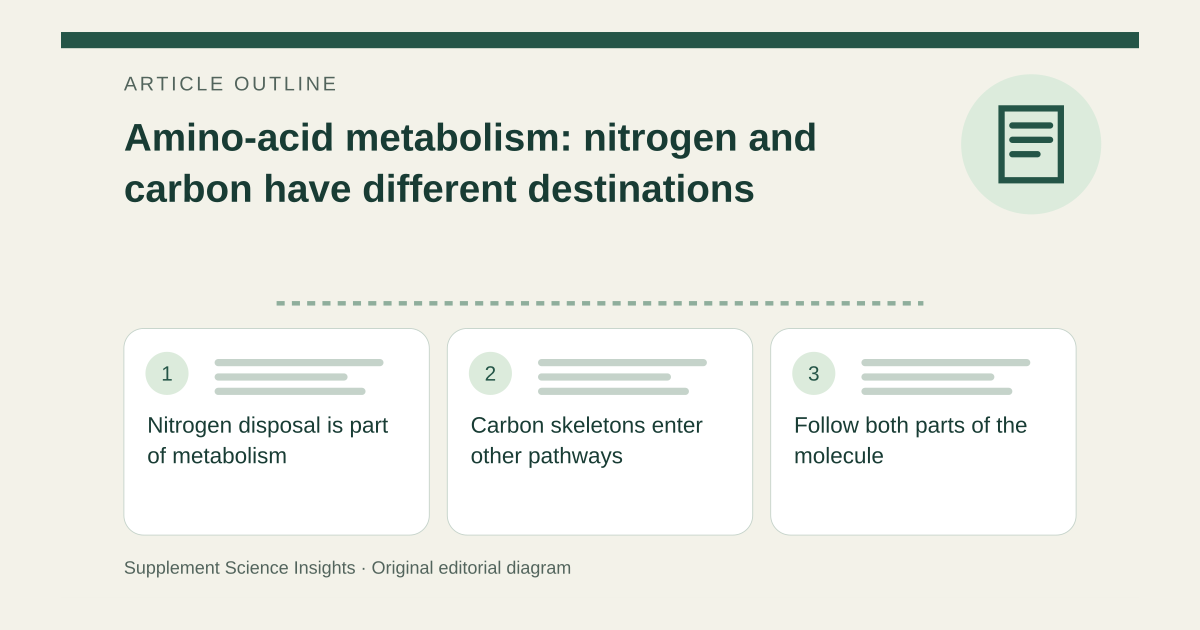
Nitrogen disposal is part of metabolism
Amino acids first matter as building blocks for proteins, including structural collagen, enzymes and transport proteins. The body uses them for synthesis, growth and repair as well as metabolism. When amino acids are broken down, their nitrogen and carbon skeletons follow different processing routes; describing those routes does not mean all amino acids are used only as fuel. [1]
The OpenStax chapter describes conversion of nitrogen from amino-acid breakdown into urea, which is eliminated through the kidneys in urine. This prevents treating protein breakdown as simply another version of carbohydrate breakdown. [1]
The account here is a pathway overview, not a complete reaction map. Amino-group transfer, release of ammonium and formation of urea are distinct biochemical steps rather than one interchangeable reaction. [1]
Carbon skeletons enter other pathways
The remaining carbon structures can contribute to metabolic intermediates such as pyruvate, acetyl-CoA or intermediates of the citric-acid cycle. Different amino acids enter metabolism through different routes. [1]
That ability does not mean all dietary protein is immediately burned for energy. It also does not establish a need for a product advertised to flush nitrogen or detoxify protein metabolism. [1]
Follow both parts of the molecule
Imagine tracing an amino acid during breakdown. Tracking only its carbon misses the nitrogen that must also be processed. Tracking nitrogen alone misses the carbon skeleton’s potential contribution to other metabolic pathways.
| Detail | Interpretation |
|---|---|
| Nitrogen | Processed for disposal |
| Carbon skeleton | Can enter metabolic pathways |
| Pathway description | Not a detox regimen |
Sources for this article
- 24.4 Protein Metabolism - Anatomy and Physiology 2e | OpenStax
Source consulted: 2026-09-17. This is a reference resource, not a claim that we conducted the studies or tested a product.