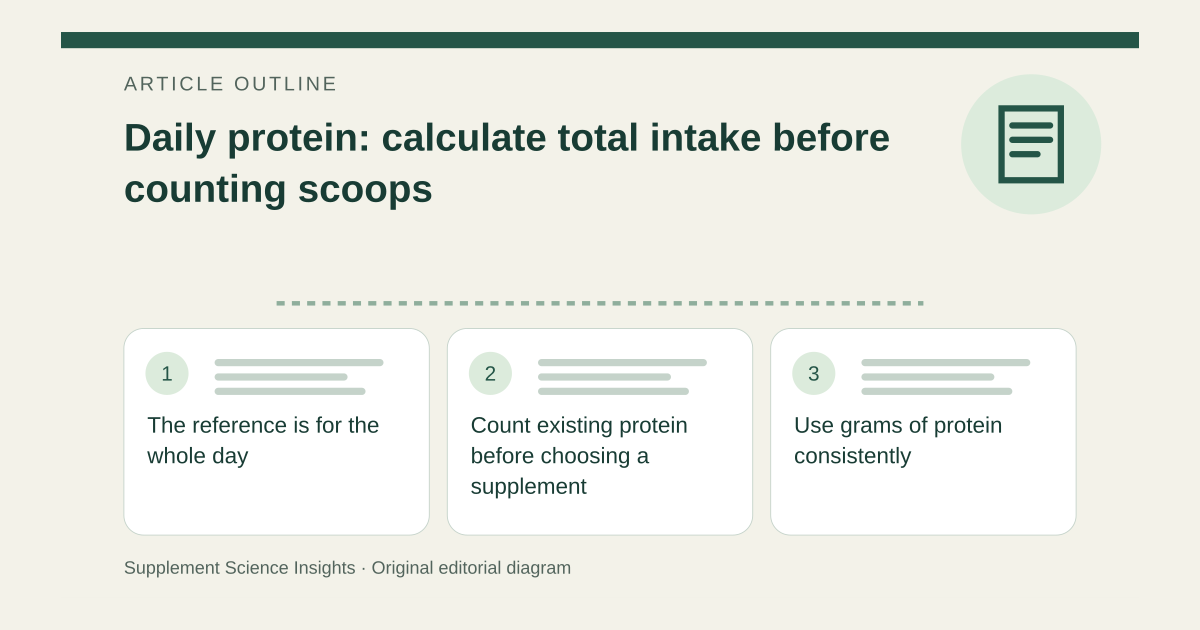
The reference is for the whole day
NIH ODS describes athlete protein intakes of roughly 1.2–2.0 grams per kilogram of body weight daily to support training adaptations. That range describes total protein, including food; it is not an amount of powder to add regardless of meals. [1][2]
The same summary distinguishes the general adult recommended allowance of 0.8 g/kg/day from sports-related intakes. Training, energy intake and health circumstances affect which reference is relevant. A sports range is not a universal requirement for every adult. [1][2]
Count existing protein before choosing a supplement
Foods such as beans, tofu, eggs, dairy, meat and fish can contribute protein. A powder is one convenient source, rather than a separate nutrient category that food cannot provide. [1][2]
A scoop measures product, while its protein entry states the nutrient amount. Use that entry when calculating a gap; flavored powders and other components need not be entirely protein. [1][2]
Use grams of protein consistently
Imagine a dietitian has set a hypothetical 100-gram daily goal and an adult obtains 80 grams from food. The arithmetic gap is 20 grams, not 100 grams of additional powder.
If a serving supplies 20 grams of protein in 30 grams of powder, one such serving would supply that arithmetic gap. This example does not establish an appropriate personal goal or make supplementation necessary.
| Detail | Meaning |
|---|---|
| Hypothetical goal: 100 g | Total daily protein |
| Food supplies 80 g | 20 g remain arithmetically |
| 30 g powder supplies 20 g protein | Count the protein entry |
A training estimate does not override a medical diet
ODS cautions that data on very high intake are limited. Medical conditions can also change nutritional planning; healthy-athlete references should not replace an individualized plan. [1][2]
The useful decision is whether the complete diet meets an appropriate target, followed by whether food or a supplement is the practical way to close any remaining gap. [1][2]
Sources for this article
- MedlinePlus: Protein in diet
Source consulted: 2026-09-17. This is a reference resource, not a claim that we conducted the studies or tested a product. - NIH ODS: Dietary Supplements for Exercise and Athletic Performance
Source consulted: 2026-09-17. This is a reference resource, not a claim that we conducted the studies or tested a product.