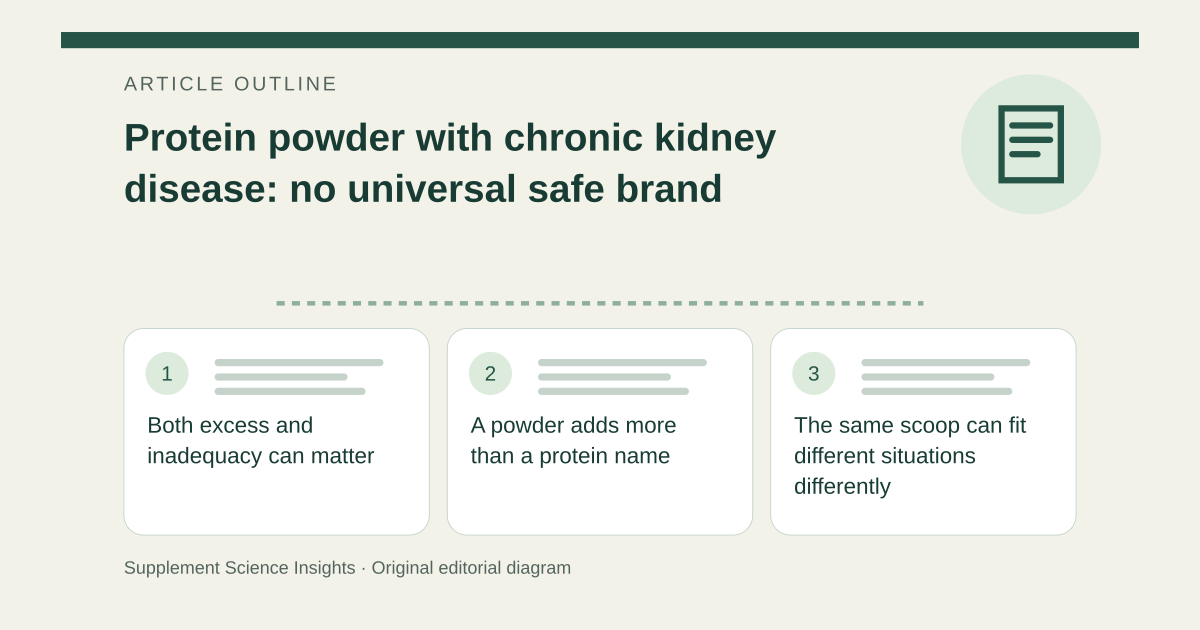
Both excess and inadequacy can matter
NIDDK explains that protein metabolism produces waste handled by the kidneys. Some people with CKD need a moderate protein intake, but too little can contribute to malnutrition. The aim is an individualized balance rather than eliminating protein or adding it without a reason. [1]
The stage of disease, current intake and nutritional status affect that plan. A general sports target is not automatically appropriate for someone with CKD. [1]
A powder adds more than a protein name
Review the serving’s protein alongside other relevant nutrients and the rest of the diet with a renal dietitian. A product advertised as plant-based, collagen or whey does not by that category alone meet an individual’s kidney-care requirements. [1]
Nor does substituting isolated amino acids remove the need to assess the nutritional exposure. Do not infer a kidney-treatment benefit from the fact that protein normally supports tissue maintenance. [1]
The same scoop can fit different situations differently
Imagine two people with CKD have different dietary intake and nutritional needs. The same powder serving can add an unnecessary amount for one and address a documented gap for the other; a universal brand ranking misses that context.
| Detail | Interpretation |
|---|---|
| Protein amount | Assess total daily intake |
| CKD stage | Changes the context |
| Product category | Not a safety clearance |
Sources for this article
- Healthy Eating for Adults with Chronic Kidney Disease - NIDDK
Source consulted: 2026-09-17. This is a reference resource, not a claim that we conducted the studies or tested a product.