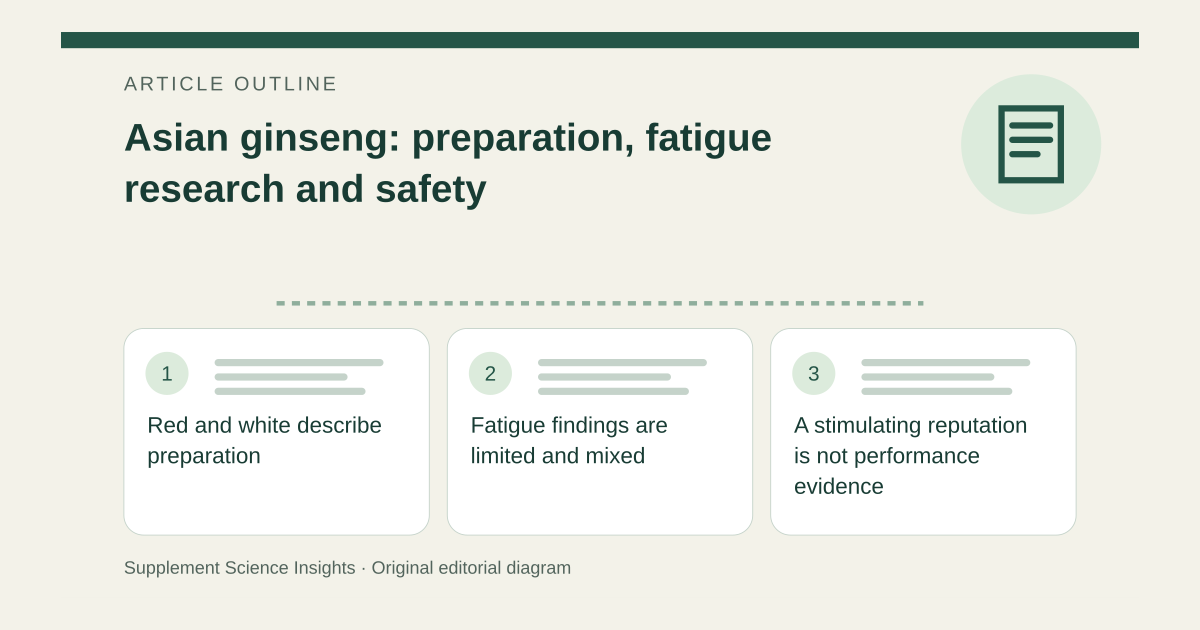
Red and white describe preparation
Asian ginseng is Panax ginseng, usually studied as a root preparation. Red and white ginseng refer to different processing methods. American ginseng and products marketed as Siberian ginseng are not the same botanical ingredient. [1]
Record the Latin name, plant part and preparation before comparing studies or bottles. A common name can hide differences that matter more than a large extract amount on the front panel. [1]
Fatigue findings are limited and mixed
NCCIH describes possible small benefits for some fatigue outcomes, while noting that research is inconsistent. Much of the clinical literature consists of relatively small, short trials. Results for a multi-herb formula cannot identify the effect of ginseng alone. [1]
Fatigue is also not one uniform condition. Findings in generally healthy adults should not be transferred to cancer-related fatigue, a sleep disorder or another diagnosed illness without relevant evidence. Improvement in a questionnaire does not establish treatment of the underlying cause. [1]
A stimulating reputation is not performance evidence
Most research summarized by NCCIH does not show improved athletic performance. Other claims, including glucose control and cognitive effects, remain dependent on the study and population rather than supporting a universal energy or focus promise. [1]
Before calling a result useful, identify the task, baseline health, comparison and follow-up period. A faster response on one test is not automatically better memory in everyday life, and a biomarker change is not a substitute for a clinical outcome. [1]
Sleep, glucose and medicines deserve attention
Insomnia is a common adverse effect. Asian ginseng may affect blood clotting, lower blood glucose or worsen autoimmune conditions, and interactions with medicines are possible. Pregnancy and breastfeeding safety is not established; some evidence raises concern during pregnancy. [1]
A person seeking relief from tiredness should not ignore a product that worsens sleep. Review the complete formula, including caffeine or other stimulants, instead of assuming every effect comes from the ginseng ingredient. [1]
Standardization gives one piece of information
Imagine an extract declares 200 mg per serving and 5 percent total ginsenosides. Its declared ginsenoside amount is 10 mg. A second 200 mg root powder has no equivalent standardization statement, so the same compound amount cannot be inferred.
That arithmetic does not establish which preparation works better. Individual ginsenosides, extraction and study formulation may differ. The table records what is disclosed rather than ranking a fictional product.
| Preparation | Declared comparison |
|---|---|
| 200 mg extract at 5% | 10 mg total ginsenosides |
| 200 mg root powder | Ginsenosides unresolved |
Keep the reason for use specific
For a fatigue claim, ask what type of fatigue was studied and whether the actual extract matches. For unexplained persistent symptoms, seek assessment. This reference summarizes authoritative guidance without endorsing a regimen or treating the term adaptogen as proof of benefit. A comparison should also distinguish a single dose before testing from repeated use over weeks; those designs do not answer the same question.
Sources for this article
- NCCIH — Asian ginseng: Usefulness and Safety
Source consulted: 2026-09-17. This is a reference resource, not a claim that we conducted the studies or tested a product.