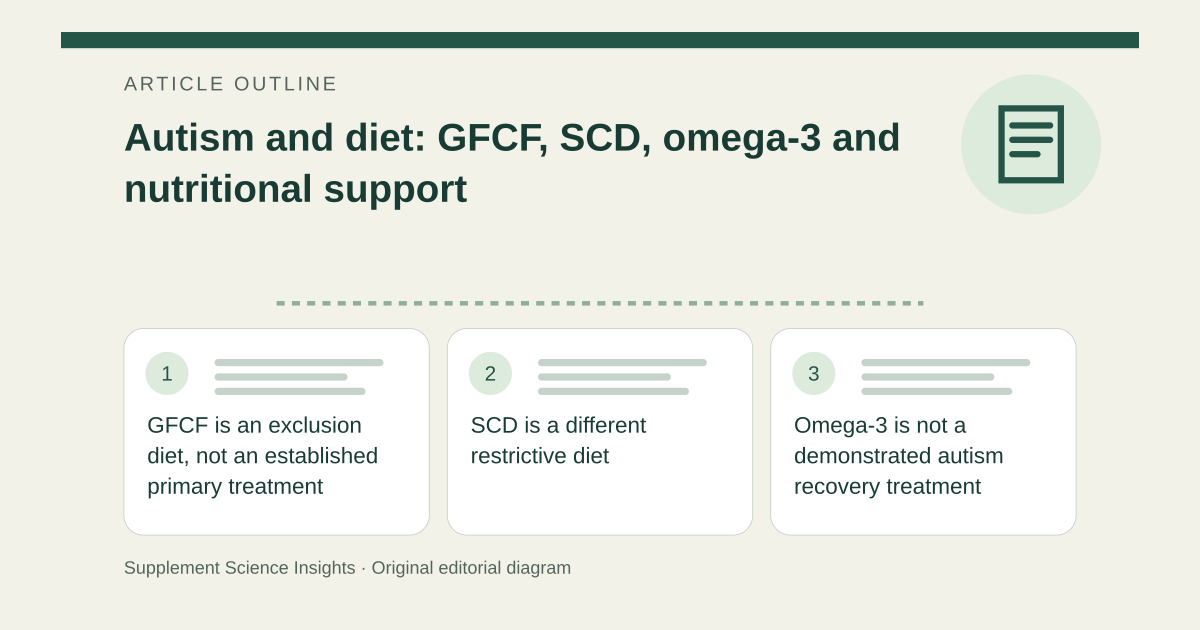
GFCF is an exclusion diet, not an established primary treatment
Gluten-free and casein-free diets remove particular grain and milk proteins. NICHD says available evidence does not support these diets as primary autism treatment, and NICE advises against exclusion diets for core features in children and young people. A separate diagnosed food-related condition needs its own care. [1][2]
SCD is a different restrictive diet
The Specific Carbohydrate Diet excludes grains and several sugars and other foods. The Crohn’s and Colitis Foundation discusses it in inflammatory bowel disease; that context does not establish benefit for autism. Its restrictions warrant careful nutrition review, especially when the existing food range is already narrow. [3][1]
Omega-3 is not a demonstrated autism recovery treatment
NCCIH describes uncertainty about whether omega-3 supplementation improves health and well-being in autistic people. An essential dietary nutrient can still lack evidence as a treatment for a particular condition. Do not substitute a supplement for appropriate developmental, communication or other support. [4]
Treat discomfort and nutritional gaps directly
Selective eating may require support to maintain adequate intake. Constipation, pain or other digestive symptoms also deserve assessment. Improving a coexisting problem can improve comfort and participation without meaning that autism has been cured. [1][2]
Protect the foods a child can currently eat
Imagine a child accepts only a small selection of foods and a proposed diet removes several of them. Before restricting further, work with the care team and dietitian on nutritional adequacy and the actual symptom being addressed. More exclusions are not automatically more effective care. [1]
| Question | Useful distinction |
|---|---|
| GFCF or SCD | Restrictive approach requiring a defined indication |
| Omega-3 | Not established as autism recovery |
| Food selectivity | Assess intake and practical support |
Sources for this article
- Nutritional Therapy for Autism | NICHD - Eunice Kennedy Shriver National Institute of Child Health and Human Development
Source consulted: 2026-09-20. This is a reference resource, not a claim that we conducted the studies or tested a product. - Recommendations | Autism spectrum disorder in under 19s: support and management | Guidance | NICE
Source consulted: 2026-09-20. This is a reference resource, not a claim that we conducted the studies or tested a product. - Special IBD Diets | Crohns and Colitis Foundation
Source consulted: 2026-09-20. This is a reference resource, not a claim that we conducted the studies or tested a product. - Autism | NCCIH
Source consulted: 2026-09-20. This is a reference resource, not a claim that we conducted the studies or tested a product.