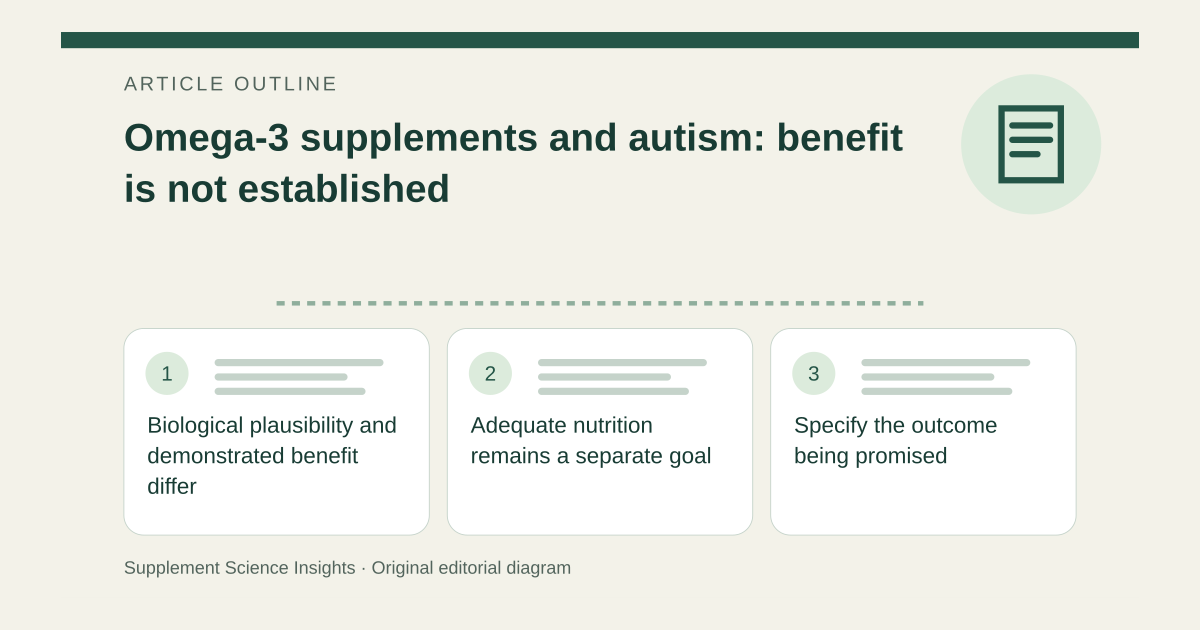
Biological plausibility and demonstrated benefit differ
Fatty acids participate in normal biology, but an intervention still needs evidence for a defined outcome in the relevant population. A general brain-health claim cannot fill that gap. [1]
The cited source is a government evidence summary, not an independent reassessment of every trial. Its conclusion should not be expanded into a claim that every formulation and outcome has been exhaustively settled. [1]
Adequate nutrition remains a separate goal
Not establishing an autism-treatment effect does not mean that omega-3-containing foods should be avoided. Assess dietary needs and any feeding restrictions separately from a claim to change autism-related outcomes. [1]
A child’s supplements should be reviewed in the overall care and nutrition plan. Do not replace established supports with a product whose advertised benefit exceeds the evidence. [1]
Specify the outcome being promised
Imagine a label says supports the brain and is promoted as improving autism-related functioning. The general nutrient statement does not demonstrate that specific benefit.
| Detail | Interpretation |
|---|---|
| Normal nutrient role | Biological background |
| Autism outcome | Needs direct evidence |
| Dietary adequacy | Separate assessment |
Sources for this article
- Omega-3 Supplements: What You Need To Know | NCCIH
Source consulted: 2026-09-18. This is a reference resource, not a claim that we conducted the studies or tested a product.