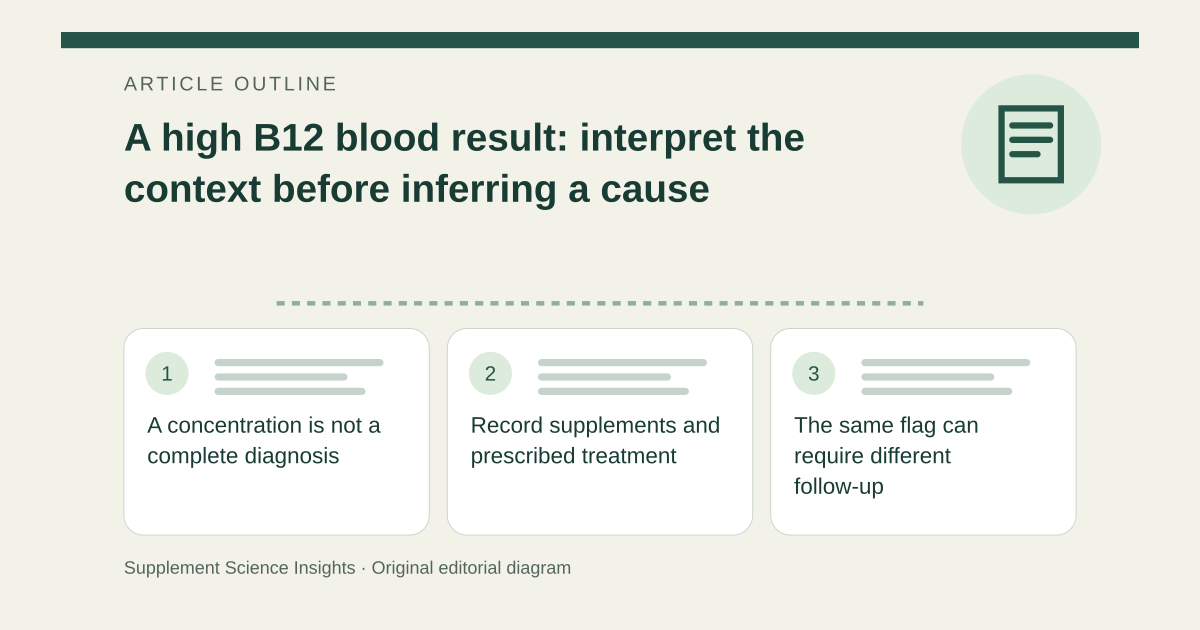
A concentration is not a complete diagnosis
MedlinePlus lists liver disease and some myeloproliferative disorders among conditions associated with increased B12 concentrations. An association is not specific enough to identify one of those conditions from the vitamin result alone. [1]
Bring the result with its units and laboratory reference interval to the clinician. A number without that context is especially difficult to compare with a result from another laboratory. [1]
Record supplements and prescribed treatment
Include injections, multivitamins and separate B12 products in the history. ODS notes that no tolerable upper intake level has been established for B12 because of its low potential for toxicity; that does not make every high blood result clinically irrelevant. [2]
Likewise, observational associations between B12 concentrations and disease do not establish that a supplement caused the disease. Do not stop necessary deficiency treatment solely to make a laboratory number lower without reviewing why treatment was prescribed. [2]
The same flag can require different follow-up
Imagine two reports carry a high flag, but one person is receiving prescribed replacement and the other has no known B12 exposure. The history changes the assessment. Neither report alone supplies a diagnosis or a universal detoxification plan.
| Observation | What it establishes |
|---|---|
| High flag | Needs context |
| Disease association | Not diagnostic by itself |
| Treatment history | Relevant to interpretation |
Sources for this article
- MedlinePlus: Vitamin B12 level
Source consulted: 2026-09-17. This is a reference resource, not a claim that we conducted the studies or tested a product. - NIH ODS: Vitamin B12
Source consulted: 2026-09-17. This is a reference resource, not a claim that we conducted the studies or tested a product.